

Trading Chart Patterns: A Practical Guide
📈 Explore key trading chart patterns that help decode price moves and guide decisions in ₹ financial markets. Learn pattern traits and practical trading tips to boost your success.
Edited By
Isabella Turner
Candlestick and chart patterns form the backbone of technical analysis for traders and investors in financial markets. These visual tools help you predict price movements based on historical trends rather than relying solely on fundamental factors. For Indian investors dealing with markets such as the NSE or BSE, understanding these patterns can offer an edge in decision-making.
A candlestick shows a stock's price action over a specific period — for instance, a day or an hour — capturing the opening, closing, high, and low prices. Unlike plain line charts, candlesticks provide richer insight by highlighting whether buyers or sellers dominated the session. Patterns like Doji, Hammer, and Engulfing convey shifts in market sentiment.
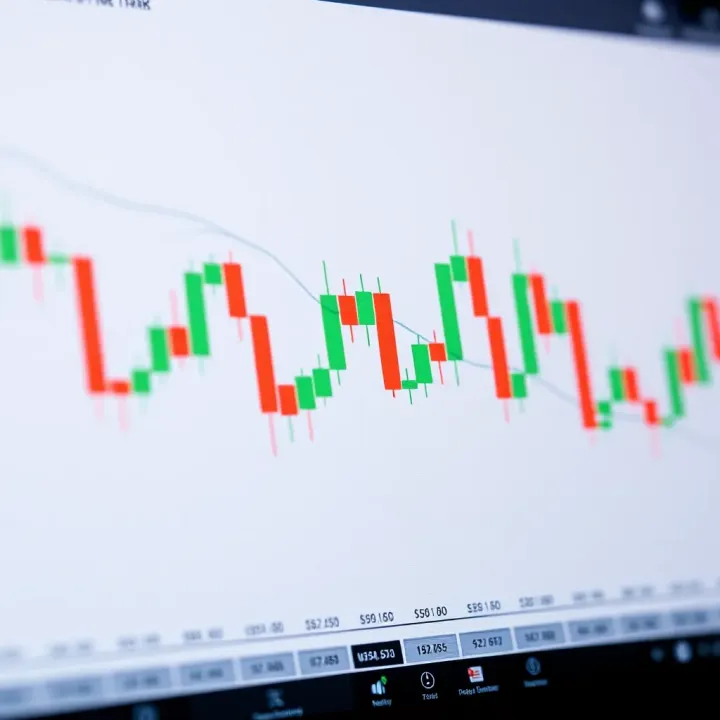
Chart patterns combine multiple candlesticks or price bars to signal possible trend continuations or reversals. Classic examples include Head and Shoulders, Double Top, Cup and Handle, and Triangles. Recognising these helps you time entry and exit points better, which is vital in volatile Indian markets where news or policy changes can swiftly alter trends.
Mastering these patterns takes practice, but it empowers you to spot potential breakouts or breakdowns before the crowd reacts, giving you a practical trading advantage.
For example, a Hammer candlestick appearing after a downtrend may suggest a bullish reversal, hinting a possible buy. Similarly, a confirmed Head and Shoulders pattern in an Nifty 50 stock could warn of an impending price fall.
This article will walk you through the most important candlestick and chart patterns every trader should know. It also provides links to free PDF resources and books that cover these concepts with detailed Indian market examples, making learning accessible.
By the end, you will be able to interpret charts more confidently and use this knowledge for practical trading or investment decisions. Whether you are a beginner or already trading, this guide aims to sharpen your technical analysis skills with a focus on patterns relevant to Indian markets.
Next, we will explore individual candlestick patterns and their meanings with clear illustrations and tips on applying them in your trades.
Candlestick charts remain a staple in trading and investing, especially for their clear visualisation of price action. They help you quickly grasp how buyers and sellers have behaved over a specific time frame, making it easier to predict future movements. For Indian traders, understanding these charts can improve decision-making in markets like the NSE, BSE, and commodity exchanges.
A candlestick consists of three main parts: the body, wick, and shadows. The body represents the difference between the opening and closing prices during a trading period. If the closing price is higher than the open, the body is usually hollow or green, indicating buying pressure. Conversely, a filled or red body means sellers were dominant as the price fell.
The wicks (or shadows) are thin lines extending above and below the body, showing the highest and lowest prices reached. A long upper wick suggests sellers pushed the price down from a high, while a long lower wick points to buyers stepping in after a price drop. These details matter because they reveal market sentiment beyond just the closing price.
Bullish and bearish candlesticks differ primarily in colour and meaning. A bullish candlestick closes higher than it opens, signalling potential upward momentum. A bearish candlestick closes lower, indicating selling pressure. Recognising these helps traders identify trends early. For example, spotting a bullish hammer at a support level may indicate a price reversal upwards.
Unlike bar or line charts, candlesticks provide a more detailed snapshot of price action. Bar charts show similar data—open, high, low, close—but lack the visual emphasis on body size and colour that helps gauge strength quickly. Line charts only plot closing prices, missing intraday price swings entirely. This makes candlestick charts especially useful in volatile Indian markets, where sudden price shifts are common.
Candlestick patterns help predict price movements by illustrating shifts in buying and selling dynamics. Patterns like the Doji or Engulfing candles alert traders to potential reversals or continuations. When you see such formations near support or resistance, they often indicate increased odds of a trend change.
These patterns work best when combined with other tools like volume indicators or the Relative Strength Index (RSI). For instance, an Engulfing bullish pattern confirmed by rising volume and an RSI moving out of oversold territory increases the reliability of the buy signal. This integrated approach reduces false alarms.
In Indian stock and commodity markets, candlestick analysis is especially relevant due to market volatility and rapid price swings. Traders in commodities like gold and crude oil benefit from real-time pattern recognition to time entries and exits better. Moreover, many Indian brokers and trading platforms now offer built-in candlestick charting, making these patterns accessible even for beginners.
Candlestick charts give you a richer picture of market psychology in plain sight, which is why they remain indispensable tools for traders and investors alike.
Candlestick patterns provide quick visual cues about market sentiment and possible price directions. They help traders anticipate trend changes, continuations, or temporary pauses based on price action alone. This is especially relevant in Indian markets where combining these patterns with other technical tools can improve trade timing and risk control.

Hammer and Hanging Man speak volumes about market psychology despite their simple structure. A Hammer typically appears at a downtrend’s bottom, with a small body and a long lower wick showing sellers pushed prices down but buyers regained control before close. It often signals a potential reversal upwards. For example, a Reliance Industries share forming a Hammer near support may hint at a bounce.
Conversely, the Hanging Man shows a similar shape but occurs after an uptrend. It suggests buyers are losing grip as sellers tried to push the price down during the session. If volumes spike, it warns of a possible reversal or consolidation phase. Traders watching the Nifty 50 might spot this pattern signaling a pause in bullish momentum.
Doji variations represent uncertainty or indecision where opening and closing prices are nearly equal. The market is balancing between bulls and bears without clear direction. Common Doji types include the Dragonfly, Gravestone, and Long-legged Doji, each providing subtle clues on potential shifts.
A Doji after a strong rally in Infosys shares, for example, might signal weakening strength and a need for caution. However, standing alone, Dojis don’t guarantee reversals; they need confirmation through following candles or volume support.
Shooting Star and Inverted Hammer are noteworthy for their long upper shadows, pointing to rejection of higher prices. The Shooting Star appears after an uptrend, warning that bulls could be losing control. It suggests sellers forced the price down from session highs. An example would be Tata Motors forming a Shooting Star near resistance levels indicating selling pressure.
The Inverted Hammer occurs at downtrends, showing rejection of lower prices and potential bullish reversal. Observing such a pattern in stocks like HDFC Bank close to support can alert traders about buy opportunities, provided confirmation comes in next sessions.
Engulfing patterns involve two candles where a smaller candle is completely swallowed by the following larger opposite-coloured candle. Bullish Engulfing shows a larger green candle overtaking a red one after a downtrend, signalling strong buyer interest reclaiming control. This can guide traders to enter long positions with confidence.
On the other hand, Bearish Engulfing appears after an uptrend, warning that sellers have taken over. For instance, if Infosys shows a Bearish Engulfing pattern near a resistance, it might imply a short-term decline or correction.
Harami patterns show a small candle completely inside the previous larger candle’s body, indicating potential indecision or pause in trend. A Bullish Harami emerges in a downtrend hinting at a slowdown in selling, while a Bearish Harami in an uptrend may signal buyers tiring out.
These patterns require volume support or subsequent confirmations. For example, ITC shares showing a Bullish Harami with increasing volume might prompt traders to anticipate a reversal.
Morning Star and Evening Star are three-candle patterns signalling trend reversals. The Morning Star appears after a downtrend as a strong bullish reversal sign. It has a large bearish candle followed by a small-bodied candle (showing indecision), then a bullish candle closing well into the first candle’s body.
This pattern can be spotted in stocks like Maruti Suzuki at key support zones indicating trend change. Oppositely, an Evening Star forms after an uptrend, warning of potential bearish reversal. Indian traders find these patterns reliable when coupled with other indicators like RSI or MACD for timing entries or exits.
Mastering these candlestick patterns helps traders read market moods more intuitively, enhancing decision-making in fast-moving Indian equity and commodity markets.
Understanding and practising these patterns builds a strong foundation for technical analysis and better trade management.
Chart patterns stand out as one of the most practical tools in technical analysis for traders and investors. They visually represent the collective behaviour of the market participants, helping predict potential price directions. Recognising these patterns can improve decision-making in Indian equities, commodities, and currencies, offering a clearer picture beyond just price and volume data.
Flags and Pennants signal short breaks or consolidations in a prevailing trend before it resumes. A flag looks like a small rectangle sloping against the main trend, while a pennant forms a small symmetrical triangle. For example, in the Nifty 50 index, flags often appear after a sharp rally, indicating a pause before the trend climbs further. Traders watch for a breakout from these patterns to confirm trend continuation and often enter trades at this point.
Triangles come in ascending, descending, and symmetrical shapes, marking periods of consolidation before price advances or retreats. An ascending triangle has a flat upper resistance and rising support, typically suggesting a bullish breakout. Descending triangles, with a flat support and descending resistance, usually indicate bearish moves. Symmetrical triangles represent indecision, with price narrowing before a breakout either way. Indian stock charts, like those of Reliance Industries or TCS, often display these patterns, signalling upcoming momentum shifts.
Rectangles are formed when price moves sideways between parallel support and resistance levels, showing balance between buyers and sellers. Such consolidation phases often precede a continuation of the existing trend. For instance, during a range-bound phase in Axis Bank stock, a rectangle pattern helped traders identify a breakout point, leading to profitable entry spots.
Head and Shoulders is a classic reversal pattern signalling a potential change from an uptrend to a downtrend or vice versa. It consists of a peak (shoulder), a higher peak (head), and another shoulder roughly equal to the first. In Indian markets, this pattern has been spotted in shares like Infosys, warning traders about a looming price correction. Confirmation comes when price breaks the neckline — a support line connecting the lows between the shoulders.
Double Tops and Bottoms occur when price hits a resistance or support level twice, unable to break through. Double tops often forecast a drop, while double bottoms hint at a rise. This pattern helps traders identify strong reversal zones. For example, HUL shares forming a double bottom during a downtrend suggested a bullish reversal, signalling a good buying opportunity.
Triple Tops and Bottoms are less common but more reliable signals, formed by three peaks or troughs near the same level. Their formation indicates stronger resistance or support, making breakouts more significant. Traders often spot these in volatile stocks or indices, using the triple pattern as a confirmation of a major trend reversal.
Recognising these key chart patterns improves timing entries and exits, reducing guesswork and enhancing profitability, particularly when combined with volume analysis and other indicators.
Understanding and applying these chart patterns can add a practical edge to your trading strategy in India's diverse financial markets.
Using candlestick and chart patterns alone can lead to misjudged trades. Combining these patterns with volume and technical indicators improves reliability and helps traders take better-informed decisions.
Volume confirmation is essential to validate a pattern's significance. A bullish engulfing pattern arising on low volume might not carry much weight, but when coupled with rising volume, it signals genuine buying interest. For instance, in the Nifty 50, a breakout from a triangle pattern accompanied by volume spiking above average confirms strength. Without volume confirmation, price moves may turn out to be false signals or short-lived.
The Relative Strength Index (RSI) and Moving Average Convergence Divergence (MACD) indicators often complement candlestick formations. RSI helps spot overbought or oversold conditions; if a hammer forms while RSI is below 30, it lends credibility to a potential reversal. Meanwhile, MACD crossovers aligning with a bullish pattern can indicate a momentum shift. But remember, indicators are lagging tools; combine them with price action to reduce errors.
Avoiding false signals requires discipline. Sometimes a Doji or a shooting star might appear but fail to deliver the expected reversal. Cross-checking with volume, RSI, MACD, and the broader market trend minimises chasing unreliable signals. For example, if a bearish pattern emerges during a strong uptrend, it might be just a pause rather than a reversal. Patience and filtering through multiple confirmations reduce whipsaws.
Setting strict stop-loss and target levels is crucial for protecting capital. Once you enter a trade based on a specific candlestick pattern, decide your stop-loss just below the recent swing low for bullish setups, or above the swing high for bearish ones. For example, if a morning star pattern forms, placing a stop-loss just below its lowest point helps limit loss if the market moves against you. Targets can be based on support-resistance zones or previous highs/lows.
Position sizing depends largely on the pattern's reliability and market volatility. Larger positions can be considered when multiple confirmations align; with weaker signals, reduce size to manage risk. Suppose you spot a double-bottom pattern on an illiquid stock prone to sudden swings; it makes sense to trade smaller quantities to keep loss tolerable.
Trading psychology impacts success significantly. Emotional trading often leads to ignoring patterns or overtrading. Stick to your plan, avoid chasing markets, and accept losses calmly. Self-control improves with experience and reviewing past trades. Many traders find journalling helpful to note emotional triggers alongside technical setups; this habit helps build discipline over time.
Combining patterns with volume and indicators, managing risk, and maintaining trading discipline are key pillars to using candlestick and chart patterns effectively. They protect your capital and increase chances for consistent profits.
Employing these practical tips will help Indian traders navigate market moves with more confidence and avoid common pitfalls.
Having dependable books in PDF format allows traders and investors to deepen their grasp of candlestick and chart patterns without being tied down by expensive textbooks or limited access to resources. For busy Indian traders juggling work and market hours, PDFs offer the benefit of portability—whether on a phone during a commute or on a laptop at home. Access to quality material helps refine technical analysis skills, which is essential for reading market signals more accurately.
For beginners, books like Japanese Candlestick Charting Techniques by Steve Nison are considered the gold standard. Nison's clear explanations of candlestick structure and trading strategies have educated countless traders worldwide. Advanced readers may find Technical Analysis of the Financial Markets by John J. Murphy valuable, as it covers a wide range of chart patterns, trendlines, and indicators with more complexity. These titles provide both theory and practical examples, guiding traders from the basics to nuanced applications.
Traders focusing on Indian markets will benefit from books tailored to local conditions. For example, Technical Analysis and Stock Market Profits by Prasanna Chandra discusses chart patterns in the context of Indian stock exchanges, highlighting volatility and regulatory factors unique to India. Such resources can help investors understand how global patterns apply—or need adjustment—when analysing Indian equities or commodities.
Legitimate free PDFs often come from educational institutions or platforms that partner to offer authorised versions of popular books. Sources like the National Institute of Securities Markets (NISM) and reputed university libraries occasionally provide free downloads or learning modules legally. Using these sources ensures you’re getting updated material and avoiding risks such as software viruses often found with unauthorized copies.
Avoiding pirated or outdated content is crucial. Besides legal issues, pirated PDFs may lack updates that reflect recent market developments or new regulatory guidelines introduced by bodies like SEBI or RBI. Older editions might also contain obsolete strategies no longer effective in today’s fast-changing markets. Always verify the publication date and source credibility before relying on any resource.
Official portals like the Securities and Exchange Board of India (SEBI) website and certain Indian financial education websites provide access to free tutorials, book PDFs, and research papers. These platforms vet content carefully and update materials regularly, ensuring you study from trustworthy sources.
Integrating the knowledge gained from books with real-time charting tools enhances learning. Many Indian brokerage platforms such as Zerodha and Angel One offer in-built technical charting software where you can practise spotting patterns mentioned in PDFs. Applying theory alongside practice develops sharper instincts for entry and exit points, improving your trading performance considerably.
Studying from reliable books combined with safe, authorised PDF resources strengthens your technical analysis foundation while safeguarding you from misinformation and legal hassles. This approach equips you well for navigating Indian and global markets confidently.
📈 Explore key trading chart patterns that help decode price moves and guide decisions in ₹ financial markets. Learn pattern traits and practical trading tips to boost your success.

📈 Learn to read key candlestick and chart patterns used in technical analysis for Indian markets. Get practical tips plus handy PDFs for quick reference.

Discover the most effective chart patterns in trading 📈! Learn practical tips and access useful PDF guides. Perfect for traders in India aiming to sharpen skills.

📈 Learn how momentum candlestick patterns signal strong price moves in trading. Understand key types, interpretation tips, and find reliable PDFs for deeper insights.
Based on 9 reviews