
Best Paper Trading Platforms in India for Beginners
Explore India’s best paper trading platforms 📈 and learn how to pick one that fits your style. Practice stock strategies safely with top features and tips.
Edited By
Isabelle Foster
Paper trading serves as a no-risk way for traders and investors to practise stock market strategies using virtual money. It mirrors real market conditions without exposing you to financial loss, making it ideal for refining skills or testing new ideas before committing actual funds.
When choosing a paper trading platform, several factors stand out. First, look for realistic market simulations. Platforms offering delayed quotes or limited instruments may hinder your learning. For example, Zerodha’s Varsity offers robust practice through realistic price movements and access to multiple asset classes.

Second, usability plays a big role. A cluttered or unintuitive interface might lead to confusion rather than clarity. Easy order entry, clear portfolio views, and quick feedback on trades help you absorb lessons faster. Practo or Upstox’s paper trading features have been praised for their simple layouts suited to beginners and experienced users alike.
Third, consider market access and range of instruments. Some platforms focus only on Indian equities, while others include derivatives, commodities, or currencies. If you aim to trade futures or options, pick platforms like NSE’s mock trading or Sensibull that offer broader product access.
It’s essential your chosen platform mimics the real market’s timing, rules, and slippage, so your practice translates well to live trading.
Additional features like customisable watchlists, technical charting tools, and news updates can deepen your trading insight. For instance, platforms integrated with TradingView charts help identify patterns during your practice sessions.
Lastly, keep in mind the platform’s reliability and cost. While many paper trading services are free, some charge for advanced tools or extended access. Choose one that fits your budget but doesn’t compromise on core functionalities.
In short, the best paper trading platform provides realistic markets, user-friendly design, broad asset coverage, and useful tools without unnecessary complexity. Reviewing these factors will help you build confidence and strategy clarity, ultimately making your live trading experiences more informed and less stressful.
Paper trading involves practising buying and selling securities without using actual money. Think of it as a flight simulator for the stock market — you get to test your strategies and understand market behaviour without risking your cash. This approach proves particularly useful for beginners keen on familiarising themselves with trading dynamics before stepping into the live market.
At its core, paper trading mimics real trading using virtual funds. Suppose you start with a virtual balance of ₹5 lakh and place trades as you would in an actual account. Here, you can buy stocks, sell them, and see how your portfolio evolves based on real market movements. The real-time data feeds often replicate the live market, ensuring your decisions reflect current trends and price changes. However, since no real money is involved, there is no actual profit or loss.
One major advantage is the chance to learn without financial pressure. For example, if you try a high-risk intraday strategy, you can experience how it plays out without the fear of losing ₹50,000. Paper trading allows you to track your performance honestly and identify mistakes. You might realise that excessive trading chips away at potential gains or that cutting losses quickly saves your capital. Also, simulated trading helps build discipline and confidence — something many new traders struggle with, especially during volatile market phases.
Paper trading suits a range of users beyond just newbies. Students of financial courses can practise concepts like order types and securities management. Seasoned investors looking to try new strategies without jeopardising their portfolio also benefit. Analysts testing algorithmic trading setups or educators demonstrating market mechanisms find paper trading platforms handy. Even those returning after a trading break can refresh their skills safely. Simply put, if you want to experiment or learn about markets risk-free, paper trading offers a practical solution.
Paper trading bridges the gap between theory and real investment, giving you hands-on experience in a controlled, no-risk environment.
In sum, understanding paper trading and its practical benefits lays the foundation for selecting the right platform. When you know what simulated trading offers, you can better judge which platform fits your learning style, goals, and market interests.
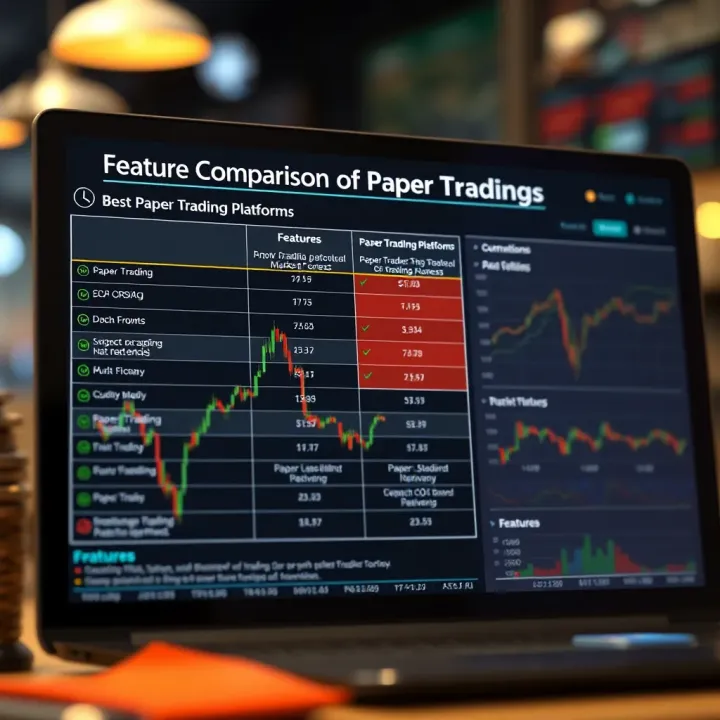
Choosing the right paper trading platform depends heavily on its features. These elements not only shape your learning experience but also determine how closely the practice mimics real-world trading. If the platform lacks realism or ease of use, it can misguide your trading skills. Here, we focus on four key features essential for any paper trading platform: realistic market conditions and data accuracy, user interface and ease of use, range of securities and market access, and educational resources and support.
A paper trading platform must replicate live market conditions as closely as possible. This means using accurate, real-time or near-real-time data feeds, reflecting market movements, bid-ask spreads, and order execution delays. For instance, platforms like NSE Paathshala offer Indian market data that helps gauge how trades would perform in actual market hours. Without this, practising with unrealistic price feeds can create false confidence. Ensuring latency and price fluctuations mirror real trading conditions helps you learn proper timing and decision-making.
A clean, intuitive interface lets traders focus on strategy rather than navigation. Platforms that overwhelm users with cluttered charts or complex menus often discourage sustained practice. For example, Zerodha's Kite provides user-friendly tools with easy order placement and clear visualisations of portfolios and watchlists. Simple drag-and-drop features for building watchlists or modifying orders speed up workflow. If you struggle finding basic functions, the platform itself becomes a barrier rather than a learning tool.
Your chosen platform should support the specific markets and assets you plan to trade. Whether it’s equities, derivatives, commodities, or currency pairs, variety matters. If you intend to trade NSE and BSE-listed stocks, pick a platform that covers these exchanges comprehensively. Some platforms limit access to only stocks and equity derivatives, missing out on commodities like MCX or currency futures crucial for certain strategies. Having access to multiple markets allows flexibility and helps test strategies across asset classes.
Paper trading is most effective when coupled with good learning aids and support. Platforms offering tutorials, webinars, or detailed trade analytics push traders beyond mindless clicking. For example, ICICI Direct offers extensive educational content for beginners alongside simulation tools. Access to customer support and community forums can clarify doubts quickly. This blend of practice and guidance makes your training more focused and helps correct mistakes early.
Remember, the goal of paper trading is to replicate real trading with minimal distractions. Choosing a platform with these features makes sure your practice is both realistic and productive, setting a foundation for confident trading in live markets.
Paper trading platforms help traders test strategies and improve skills without financial risk. Choosing a platform that fits your needs is essential, especially if you want exposure to specific markets like India or global exchanges. Different platforms vary in how closely they simulate real market conditions, the kinds of securities available, and additional educational tools. Let's look at the popular options in Indian and international contexts.
Platforms catering to Indian traders often link directly to the National Stock Exchange (NSE) and Bombay Stock Exchange (BSE), offering real-time data and realistic trade execution speeds. For example, Zerodha’s Kite Connect provides paper trading via third-party apps like Sensibull or Backtest. Upstox also offers a virtual trading feature tied to Indian market instruments. These platforms allow practice with stocks, derivatives, currency, and commodity segments popular in India. They include Indian-specific features like integrated market news and GST-compliant transaction records. Indian users benefit from using platforms linked with familiar brokers for ease of transition to live trading.
Internationally, platforms such as Thinkorswim by TD Ameritrade and Interactive Brokers offer comprehensive paper trading simulators. They cover multiple asset classes, including US equities, forex, commodities, and options, with highly detailed charting and technical analysis tools. These simulators suit experienced traders who want to explore diverse markets or complex strategies beyond India’s scope. However, some features or data may require paid subscriptions or US bank accounts, limiting accessibility for Indian users. Yet, many investors use these platforms for global market exposure, practising risk management or algorithmic strategies under simulated conditions.
Most paper trading services are free, but some advanced tools come with subscription fees. Indian platforms generally keep virtual trading free or bundled with brokerage accounts, making them easily accessible for first-timers. Foreign platforms often provide free trials, but ongoing access depends on account funding or monthly payments. Accessibility also involves device compatibility: many Indian apps focus on mobile-friendly interfaces given smartphone prevalence, while global platforms may require desktop applications for full features. When choosing, consider how the platform balances cost against features and ease of use so you can practise effectively without unnecessary expense.
Selecting the right paper trading platform depends on market focus, toolset, and how they fit your learning style. Indian-focused platforms offer local conditions and compliance, while global simulators broaden your trading horizons.
By understanding these differences, you can pick a platform that suits your goals, whether that’s learning Indian trading first or testing advanced strategies worldwide.
Choosing a paper trading platform that aligns with your trading goals ensures you get the best out of the practise without wasting time or effort. Whether you aim to learn intraday trading, options strategies, or long-term investing, your platform should reflect those needs clearly. For example, if your interest lies in options, a platform offering option chains and Greeks calculations will help you practise effectively.
Your trading style should guide your platform choice. Say you prefer high-frequency intraday trades; then a platform with real-time market data and fast order execution simulation matters most. On the other hand, if you focus on equity delivery or systematic investment plans (SIPs), look for platforms that allow you to simulate long-term portfolio performance with dividend adjustments and corporate actions. For instance, a trader testing swing trading might need both daily and weekly charts along with reliable technical indicators. Picking the right features means your practice closely mimics your real-world strategy.
Some platforms offer advanced tools but come with a steep learning curve. This could discourage beginners who need simplicity and step-by-step guidance. Platforms with tutorials, FAQs, and active customer support help you get started without frustration. For example, Zerodha’s console provides documentation and videos that ease novices into paper trading. Meanwhile, seasoned traders might prefer platforms like Interactive Brokers’ paper trading simulator, which provides sophisticated options but less hand-holding. Evaluating support options helps you balance learning speed with the platform’s complexity.
Before dedicating time or money, try out several platforms through their free trials or demos. This hands-on experience lets you assess how intuitive the interface is, how accurate the simulated market data feels, and whether the available features suit your goals. For example, NSE Paathshaala’s trading simulator allows beginners to try Indian equity markets without charges, giving a risk-free environment to test. You could create mock trades for a week or two to see how well the platform adapts to your style. This approach prevents surprises and ensures you invest in a platform that truly supports your trading ambition.
Selecting the right paper trading platform tailored to your strategy and learning needs is the first step to mastering the market without risking real money.
Paper trading offers a safe environment to sharpen your trading skills, but you must approach it thoughtfully to gain real benefits. This section shares practical tips to maximise your learning and prepare confidently for live trading.
It’s natural to expect to make profits quickly in paper trading, but the simulated environment cannot fully capture the emotions and pressures of real markets. For example, while a platform may show perfect order execution, when you trade live, slippage and delays can impact your outcomes. So, treat paper trading as a learning tool rather than a prediction of guaranteed success. Set clear goals like mastering order types or testing a new strategy instead of chasing profits. This mindset helps avoid frustration and keeps your focus on skill-building.
Consistently reviewing your trades during paper trading can reveal patterns and errors you might miss otherwise. Maintain a trading journal noting entry and exit points, reasons behind decisions, and emotional state. For instance, you might spot a habit of exiting winners too early or holding on to losing positions. Use platform analytics to check accuracy, win-loss ratios, and risk management effectiveness. Learning from these insights improves your discipline and strategy, laying a strong foundation before moving to real money.
Remember, each mistake in paper trading is a valuable lesson that costs nothing but time.
Moving from simulation to real funds requires a gradual approach. Start small—trade with minimal capital to experience real market emotions like fear or greed. Techniques like setting stop-loss orders and sticking to a plan remain crucial. Also, expect that your performance initially may differ from paper trading results due to psychological and market variables. For example, while you might have managed risk well on paper, real money can trigger impulsive reactions. Hence, treat live trading as a new phase of learning rather than an immediate step up. Additionally, ensure your chosen platform supports seamless switching between paper and live modes with consistent tools and data.
By setting realistic goals, analysing your trades carefully, and easing into live markets, you make the most of the paper trading experience. These steps help bridge the gap between theory and practice, building the confidence and skills every trader needs.
Explore India’s best paper trading platforms 📈 and learn how to pick one that fits your style. Practice stock strategies safely with top features and tips.

📝 Explore the best paper trading sites to practise stock buying and selling safely. Compare features, ease of use, and find the right platform for your trading style.

📝 Learn how online paper trading helps beginners practice stock market strategies risk-free. Discover top tools, tips, and common pitfalls to avoid.
Learn option paper trading in India 📈. Explore basics, benefits, top platforms & risk management tips. Practice trading options safely without real money 💡.
Based on 15 reviews