
Free Online Paper Trading Platforms for Beginners
📈 Discover free online paper trading platforms in India! Learn how to practice trading safely, explore top platforms, and boost your skills risk-free.
Edited By
Emma Clarke
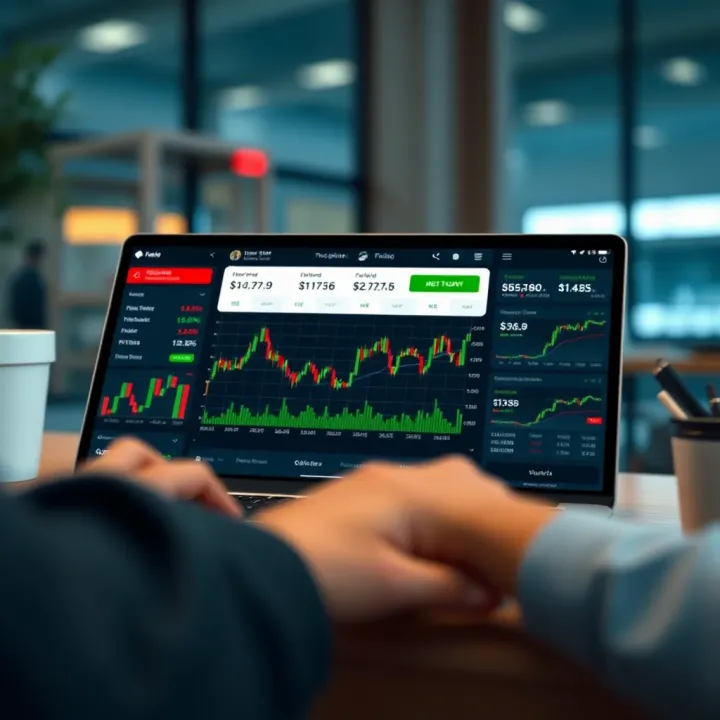
Paper trading platforms offer a risk-free space to practice stock market strategies before committing real money. In India, where the equity market can be volatile and complex, these platforms let traders and investors sharpen their skills without financial exposure.
Choosing the right platform means understanding what features matter most to you. Some platforms provide detailed real-time market data, while others focus on user-friendly interfaces or extensive educational resources. For example, apps like Moneybhai or Investopedia Simulator combine simplicity with Indian market details, making them popular among beginners.
Here are some key points to consider when picking a paper trading platform:
Market data accuracy: Ensure the platform uses live or near real-time data from Indian exchanges like NSE and BSE. Delayed data can mislead your simulated decisions.
Order types and depth: Platforms that support various order types—limit, market, stop-loss—give a closer experience to real trading.
User interface: A clean, intuitive dashboard helps you track your portfolio and analyse trades effectively.
Learning resources: Platforms offering tutorials or community forums can ease the learning curve.
Mobile access: Given India’s growing mobile internet base, having a responsive app matters.
Paper trading isn’t just for beginners. Even seasoned investors can test new strategies safely before applying them with real funds.
Trying out multiple platforms yourself often reveals which aligns with your trading style. Some platforms excel in delivering complex technical indicators, while others focus on simplicity and quick trade execution.
In the sections ahead, we'll explore popular paper trading platforms in India, break down their features, and share tips to get the most out of your practice sessions. This will help you gain confidence and improve your trading skills without risking a rupee.
Paper trading is a practice where traders simulate buying and selling stocks without actual money at risk. Think of it as a dry run for the stock market—using virtual funds to test strategies before putting real money on the line. This method helps you familiarise yourself with market behaviour and refine your approach without facing financial loss.
Paper trading imitates real trading, but without involving any actual transactions or capital. For example, if you had ₹2 lakh to invest, you could ‘buy’ shares of Reliance Industries using virtual funds, then track how your portfolio performs over days or weeks. The price changes and order executions mimic live markets as closely as possible, offering a near-real trading experience while keeping your money safe.
In India’s dynamic markets, paper trading allows beginners to build confidence and seasoned traders to test new strategies under real market conditions. The Sensex and Nifty 50 fluctuate daily, and practising trades helps you understand market volatility and timing. Moreover, with India’s growing popularity in equity derivatives, paper trading lets traders explore options and futures without risking capital.
Consider this: a trader experimenting with intraday techniques can use paper trading to see which indicators work best without losing ₹10,000 in trial. It’s also handy for learning platform features on brokers like Zerodha or Upstox before investing real money.
That said, paper trading isn’t a perfect replica of live trading. Emotional factors like fear and greed don’t play out the same way when you’re not risking actual money. Execution delays or slippages might be absent, giving an unreal smoothness to trades. Plus, liquidity aspects sometimes differ; certain stocks might look easily tradable in simulation but face challenges in real markets.
A common pitfall is overconfidence—traders may do well on paper but struggle when real stakes are involved. It’s also worth noting most platforms update price data with slight delays compared to actual market feeds, which can affect strategy testing.
Paper trading is a valuable training ground, but transitioning to real trading requires mental preparation beyond just strategy refinement.
By understanding both the benefits and drawbacks of paper trading, Indian traders can use these platforms wisely to improve their skills, manage risks better, and approach the markets more informed.
Choosing the right paper trading platform in India hinges largely on the features it offers. Traders need tools that closely mimic real market conditions, are easy to use, and provide access to relevant data. Without these essentials, practising without real money loses its value.
A platform’s ability to accurately simulate live market conditions is key. For example, it should reflect the dynamic price changes seen in the National Stock Exchange (NSE) or Bombay Stock Exchange (BSE), including sudden spikes or dips caused by news events or economic data releases. Such realism helps traders understand price movements and test strategies under conditions similar to real trading. If slippage—the difference between expected and executed price—is not represented, the simulation might give a false sense of success. Consider platforms that include order types like limit and stop-loss, so you can practise managing risk effectively.
A cluttered or complicated interface can distract and confuse, especially for new traders. The platform should offer a clean, intuitive layout with easy-to-read charts and simple navigation. Essential tools include technical indicators like RSI or moving averages, drawing tools for trend lines, and the option to backtest strategies on historical data. For instance, a beginner might find Zerodha Kite’s clean interface easier to grasp, whereas more advanced users might prefer platforms with customizable dashboards.
Paper trading makes sense only when you practise with real Indian market instruments — stocks listed on NSE or BSE, derivatives like options and futures, and mutual funds available on Indian platforms. Having updated data on these assets allows traders to get a feel of the Indian market’s unique volatility and patterns. Additionally, some platforms offer access to other asset classes like commodities or currency pairs relevant for Indian traders.
Most paper trading platforms are free, but some charge for premium features or market data access. In India, it makes sense to choose platforms that do not impose heavy costs upfront, especially if you’re a beginner. Accessibility also matters: can you use it on mobile during your daily commute, or is it desktop only? A platform like Upstox Pro Simulator offers mobile-friendly access, letting you practise whenever convenient without paying a single rupee.
Choosing a paper trading platform with realistic simulation, a user-friendly interface, Indian market data, and low cost ensures you gain practical experience that closely matches live trading.
By focusing on these features, you can pick a tool that fits your needs and gives you the confidence to make informed decisions when you go live.
Choosing the right paper trading platform is vital for practising stock market strategies without risking real money. This section highlights some of the most popular platforms used by Indian traders. Knowing their strengths and limitations helps you pick one that fits your trading style and provides a realistic environment for testing ideas.
Upstox Pro Simulator offers a smooth trading experience closely tied to live Indian markets. Its interface mirrors the actual Upstox Pro trading platform, making the transition to live trading easier. The simulator includes features like order types, live market depth, and charting with indicators, which are essential for intraday traders. While it’s free for existing Upstox users, beginners can access limited features before upgrading. However, it focuses mainly on equities and intraday options, which might limit those interested in other asset classes.
Zerodha's Kite Paper Trading lets users practice on a platform nearly identical to the live environment. It provides real-time market data from NSE and BSE, giving a genuine feel of Indian securities. The platform supports a wide range of instruments, including equities, derivatives, and commodities. One useful aspect is the integration with Zerodha’s educational initiative, Varsity, allowing newcomers to learn and practice simultaneously. Yet, it requires a Zerodha account to access, which may not suit casual users just starting out.
TradingView is a global favourite for its intuitive charts and community insights. Its paper trading feature supports Indian stocks and indices, although market data comes with slight delays compared to domestic platforms like Zerodha or Upstox. The strength lies in the advanced technical analysis tools and a vast user base sharing ideas and strategies. This feature benefits swing traders and investors focusing on technical signals, but the lack of full real-time Indian market depth might be a drawback for high-frequency traders.
Sensibull specialises in options trading, offering a virtual trading platform that simulates Indian options markets accurately. It’s great if you want to explore strategies like spreads, straddles, and iron condors without risking capital. The platform guides users with strategy suggestions and risk metrics, making it friendly for both beginners and seasoned options traders. However, it’s limited to options, so equity or commodity traders will need other platforms for their practice.
Other platforms worth mentioning include Trade Brains, which provides simulated trading combined with educational content, and MarketXLS that integrates Excel with stock market data for custom strategy testing. Although not mainstream, they offer unique value for niche needs like algorithmic strategy testing or financial modelling.
When selecting a paper trading platform, consider factors like instrument variety, data accuracy, usability, and whether it matches your intended trading style. Trying out a couple of platforms before committing can help you identify the best fit.
By understanding these platforms’ features and limitations, you’ll be better prepared to choose one that truly helps sharpen your trading skills in the Indian context.
Paper trading offers an invaluable risk-free environment to sharpen your trading skills before committing real money. However, to truly benefit, it requires a disciplined approach which goes beyond merely clicking 'buy' or 'sell'. These tips will help you turn simulated trades into practical learning that can boost your confidence and results when you move to live markets.
Start with clear, achievable targets rather than aiming to double your virtual portfolio overnight. For example, aim for steady monthly returns around 3–5% or focus on mastering one trading strategy at a time. Setting loss limits is equally important; treat simulated losses seriously to cultivate the discipline needed in real trading. This practice helps prevent emotionally-driven decisions and instils patience.
Avoid the trap of reckless risk-taking simply because no real money is at stake. Practise treating your paper trading account like actual capital, which sharpens your risk management skills. For instance, if you decide your maximum loss per trade should be 1% of your portfolio, stick to this limit even in simulation.
Consistently monitor your trades and maintain a detailed journal capturing entry points, exit points, strategies used, and outcomes. This log becomes your reference for spotting patterns in what works and what doesn't. For example, if you notice that trades around quarterly results tend to go against you, you can adjust your strategy next time.
Reflection is key—don’t just focus on successes. Analyse losses objectively to understand whether they stemmed from poor timing, strategy flaws, or external market factors. Many traders find that reviewing their performance weekly helps refine their approach faster than erratic, spur-of-the-moment trades.
Moving from a virtual account to live trading is a big step that requires adjustment. Start by investing smaller amounts that you can afford to lose, such as ₹10,000 or ₹20,000, to acclimatise to the emotional and psychological aspects of real money trading.
Recognise that slippage, order execution delays, and market volatility can differ sharply from simulations. A strategy that seemed foolproof on paper may face unexpected challenges. Adjust your plans gradually rather than switching all positions at once.
Realise that paper trading is a training ground, not a guarantee. While it builds skills, live trading demands mental resilience and adaptability to real-time pressures.
By setting measurable goals, reviewing your performance honestly, and transitioning cautiously, you stand a better chance of turning paper trading lessons into consistent live market success. This disciplined approach enriches your trading journey and reduces costly mistakes down the line.
Selecting the right paper trading platform matters because it shapes how effectively you can practise and refine your trading strategies without risking real money. A good platform aligns with your trading goals, offers practical tools, and faithfully mirrors market conditions, especially the nuances of Indian markets. For example, if you mainly trade NSE derivatives, a platform with detailed options analytics and real-time data from the National Stock Exchange will serve you better than a generic international simulator.
Every trader has a unique approach, whether it's day trading, swing trading, or long-term investing. Your choice of platform should reflect this. For instance, an active day trader might prioritise a platform with fast order execution simulation and a user-friendly interface like Upstox Pro Simulator, while a novice investor could benefit more from Zerodha Kite’s simpler paper trading features coupled with educational tools. Also, consider the asset types you trade—platforms that offer commodities, equities, and derivatives all together will suit those with diversified interests. Balance between advanced features and ease of use is key; too complex tools can overwhelm beginners, whereas limited functionality may frustrate an experienced trader.
Beyond practising trades, continuous learning helps deepen understanding and sharpen skills. Many platforms, like Sensibull, integrate educational content on options strategies while TradingView offers extensive charting tutorials to master technical analysis. Additionally, government bodies and regulatory websites such as SEBI and RBI provide updates on market rules and economic policies that affect trading. Books by Indian authors on stock markets and courses available on platforms like NSE’s certification programmes also enrich knowledge. Combining paper trading experience with these resources ensures you not only practise but also understand what drives market movements and risk management.
Picking a platform isn't just about its features; it’s about how well it fits your style and helps you learn. This practical matching improves confidence before you move to live trades.
By carefully considering your trading style and leveraging the right learning resources, you can select a paper trading platform in India that will serve as a reliable stepping stone in your market journey.
📈 Discover free online paper trading platforms in India! Learn how to practice trading safely, explore top platforms, and boost your skills risk-free.
Choosing the best forex trading platform in India involves analysing regulations, fees, features, and user experience to suit your investment goals 📈💹

Explore the best crypto options trading platforms in India 🇮🇳. Compare features, strategies, and legal guidance to pick the right platform for your investments.
Explore the top option paper trading apps in India 📱 Learn to trade options safely with no risk 💡 Get tips to sharpen your skills and choose the best app.
Based on 8 reviews