

Understanding Online Binary Addition - A Practical Guide
Learn how online binary addition works, step-by-step! Explore its basics, try tools, and see where it’s useful in real life 👨💻🔢💡
Edited By
Liam Foster
At its core, the binary alphabet refers to a set of symbols consisting only of two digits: 0 and 1. This straightforward system serves as the foundation of digital communication and computing worldwide. Each binary digit, or bit, represents the smallest unit of data, with combinations of bits forming larger units that encode information.
The significance of binary lies in its efficiency for electronic devices. Computers and digital circuits operate best with two distinct states—on or off, true or false—which binary exactly matches. This simplicity ensures reliability and speed, crucial for processing complex calculations or transmitting data across networks.

The binary alphabet provides a common language that binary devices use to represent, store, and communicate all types of data, from text to images and sounds.
Binary codes translate these bits into human-readable characters through schemes like ASCII (American Standard Code for Information Interchange) or Unicode. For example, in ASCII, the letter 'A' corresponds to the binary sequence 01000001. Understanding this conversion helps appreciate how anything typed on a keyboard eventually becomes a series of 0s and 1s inside a computer.
Practical uses of binary alphabets extend beyond computing to fields such as telecommunications, encryption, and digital media. For instance:
Mobile communications depend on binary signals to transfer voice and data.
Cryptography uses binary operations to secure messages.
Digital images and videos are stored as binary arrays representing colour, brightness, and timing.
With advancements in technology, binary systems continue evolving. Emerging coding schemes and efficient binary representations help manage growing data demands and enhance computing power. For traders, analysts, educators, and tech enthusiasts, grasping the fundamentals of the binary alphabet offers a clearer understanding of the digital world that shapes modern life.
By mastering binary basics, you gain insight into how everyday devices work — from smartphones to stock market data platforms — enabling smarter decisions and deeper technical appreciation.
Understanding the basics of the binary alphabet is essential for anyone interested in digital technology, computing, or data communication. This section sheds light on the fundamental concepts behind how data is represented and processed in electronic systems, making it clear why this simple system powers complex modern devices.
The binary alphabet consists of just two symbols: 0 and 1. Unlike traditional alphabets that have multiple letters, the binary alphabet is minimalistic but highly effective for digital encoding. It forms the foundation of all modern computing because electronic circuits easily distinguish between two states, typically off (0) and on (1). This simplicity makes it practical for computers to process and store vast amounts of information reliably.
The scope of the binary alphabet is broad; it is not just limited to numbers but extends to letters, symbols, and instructions inside a computer. Whether it is a text document, an image, or a video, everything eventually converts into sequences of 0s and 1s for the machine to understand. This system enables universal communication between electronic devices irrespective of their operating systems or applications.
Unlike traditional alphabets used in writing, the binary alphabet encodes data in a way that machines can handle efficiently. While a traditional alphabet has various characters representing sounds or meanings, the binary alphabet uses only two characters to represent data through combinations and sequences. This characteristic is the reason digital systems can operate at incredible speeds while maintaining accuracy.
A single 0 or 1 is called a bit (binary digit). Groups of eight bits form a byte, which is the basic unit of digital information. By arranging bits in different patterns, computers represent everything from numbers to complex instructions. For example, the English letter 'A' is represented by the byte 01000001 in the ASCII coding system.
The binary numbering system is base-2, different from the decimal system we use daily, which is base-10. Each position in a binary number represents a power of 2, starting from the rightmost bit as 2⁰. This system allows easy conversion between binary and decimal numbers, which is essential in computer engineering and programming.
The role of 0s and 1s goes beyond mere symbols; they represent distinct electrical states. Zero usually means no electrical charge (off), while one represents the presence of charge (on). This duality allows electronic circuits to switch reliably between two voltages, forming the backbone of digital logic. Understanding this concept helps explain why binary code is resilient against noise and errors, making digital communication robust.
The binary alphabet, with its simple 0s and 1s, acts like the digital world’s own language, enabling seamless communication between human commands and machine execution.
By grasping these basics, traders, investors, analysts, educators, and enthusiasts can better appreciate how the systems underlying digital devices actually work, potentially influencing their decisions in tech investments or education strategies.
Understanding the structure and encoding of the binary alphabet is essential for grasping how digital devices store and communicate information. Encoding schemes transform human-readable characters into binary codes, enabling computers to process text, symbols, and commands effectively. This section explores how individual characters map to binary and highlights practical coding systems used in computing.
Representing letters and symbols in binary involves converting each character into a unique sequence of bits—strings of 0s and 1s. For example, the capital letter 'A' translates into the binary sequence 01000001. Each bit in this sequence corresponds to an on or off electrical signal, allowing computers to store letters precisely. This binary representation enables consistent and error-free processing of data across different devices.
One reason this is practically significant is that these binary codes standardise communication between hardware and software. Whether you type a message on your mobile or send data between servers, the underlying letters and symbols rely on these binary patterns to be understood universally.
Common coding schemes such as ASCII and Unicode govern how binary codes represent characters. ASCII (American Standard Code for Information Interchange) uses 7 or 8 bits to represent 128 or 256 characters respectively, including English letters, digits, and basic symbols. The simplicity of ASCII makes it suitable for standard English text but limits its ability to handle diverse languages.
Unicode expands beyond ASCII by using more bits to represent tens of thousands of characters from worldwide scripts, such as Devanagari, Bengali, and Tamil. This broader character support is vital for globalisation and modern computing, allowing Indian languages to be encoded and displayed correctly on devices. Unicode’s use of varying bit lengths—up to 32 bits—helps accommodate regional scripts and emojis alike.
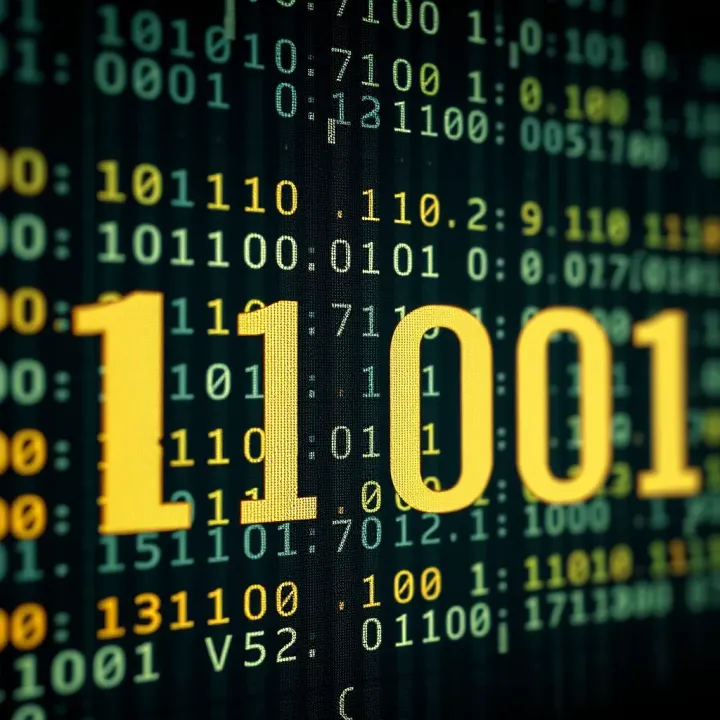
The conversion process from binary code to readable characters involves decoding the binary sequences back into symbols. Software routines interpret fixed-size groups of bits according to the encoding scheme in use—for instance, 8 bits per character in ASCII. This decoding happens instantly during text rendering, translating digital signals into visible letters.
This conversion is particularly useful in fields like data communication and file storage, where binary streams must be interpreted accurately. Without mapping these bits back to text, the data would be meaningless gibberish.
For example, the binary sequence 01001000 01100101 01101100 01101100 01101111 translates to "Hello" in ASCII. Each 8-bit segment corresponds to one letter, making this sequence readable. Applying Unicode can represent multilingual texts similarly, enabling messages in Hindi or Tamil to be encoded and decoded seamlessly.
Knowing how binary codes map to text is the backbone of both programming and everyday digital interaction, from messaging apps to database management.
Understanding the structure and encoding of binary alphabets arms traders, educators, and analysts alike with knowledge about how digital letters are formed and interpreted—a fundamental step in working effectively with technology today.
The binary alphabet forms the backbone of modern technology, powering everything from computing devices to communication networks. Its simplicity—a system using just zeros and ones—lets machines store, process, and transmit complex information efficiently. Grasping its applications helps traders, investors, and educators appreciate how digital systems function and evolve.
Storing information with binary code means representing all forms of data—text, images, audio, and video—as sequences of 0s and 1s. This binary storage is crucial because digital devices only understand two voltage states (on and off). For example, a word document on your computer translates into a long string of bits stored on a hard drive or solid-state drive. This universal approach enables different devices and platforms to read and write data accurately without compatibility issues.
Processing data using binary alphabets allows computers to perform calculations and logical operations quickly. Every instruction a computer executes breaks down into binary commands, which the processor interprets. This binary system simplifies hardware design and enhances reliability. Think of your smartphone running apps—it constantly converts user inputs into binary signals, executes corresponding binary instructions, and displays results. This seamless processing underpins everything digital, from stock trading platforms responding to real-time market data to AI algorithms analysing trends.
Binary alphabets are vital in networking protocols and data transmission. When you send a message over the internet or make a call, that information is encoded into binary packets. These packets travel through various channels—fibre optics, wireless networks, or copper cables—where devices interpret the 0s and 1s to reconstruct your data on the receiving end. This standardisation ensures smooth data flow, regardless of location or device, and supports India’s massive digital infrastructure, including platforms like UPI and broadband services.
Error detection and correction with binary codes safeguard data integrity during transmission. Noise and interference can flip bits, causing errors. Systems use additional binary bits—called parity bits or error-correcting codes—to spot and fix these mistakes. For instance, in mobile networks, error correction algorithms help maintain call quality and data accuracy, reducing dropped calls or corrupted downloads. This feature is especially important for financial transactions and sensitive communications where accuracy is non-negotiable.
The binary alphabet’s role extends beyond mere encoding; it forms the foundation of reliable, efficient technology that billions lean on daily—from banking apps to cloud services, making it indispensable for modern life.
Binary code simplifies the storage of varied data types on digital devices
Computers run instructions using binary alphabets for speed and precision
Networking protocols carry binary packets to enable global connectivity
Error detection/correction maintains data quality in noisy environments
Understanding these applications helps to appreciate how the binary alphabet keeps our digital world ticking, offering a solid basis to explore more advanced technological trends.
Practical examples and exercises with binary alphabets help bridge the gap between theory and real-world application. Working through actual binary sequences sharpens understanding of how digital data is encoded and decoded. For traders, analysts, and educators alike, hands-on experience with binary alphabets improves technical literacy, making it easier to grasp concepts underlying modern computing and data communication.
In particular, simple conversion exercises demonstrate how sequences of 0s and 1s translate into meaningful text, revealing the fundamental role of binary code in everyday technology. Furthermore, practising decoding techniques helps avoid common pitfalls and highlights the importance of accuracy when dealing with digital information.
Manual decoding means translating binary strings into readable characters without automated software. This process is fundamental for understanding the binary alphabet's structure. For instance, take the binary sequence 01001000 01100101 01101100 01101100 01101111. Breaking it down into 8-bit chunks representing ASCII characters reveals the word "Hello". Such exercises emphasise how computers store and transmit text, giving learners insight into how data appears at the lowest level.
Manual decoding also cultivates careful attention to detail. A simple misread bit can change the entire output, so practice strengthens accuracy and familiarity with binary notation. While tools speed up this process, knowing manual decoding helps troubleshoot digital communication errors and deepens conceptual clarity.
Digital tools and online converters simplify binary-to-text translation, making the process faster and less error-prone. These are especially helpful for long sequences or when analysing real data streams. Popular tools support formats like ASCII and Unicode, allowing users to decode various binary-coded texts instantly.
For traders or analysts working with cryptic datasets or communication protocols, access to decoding tools provides quick insights without the need for in-depth bit-level calculation. Teachers can demonstrate decoding live during classes, engaging students effectively. However, understanding how tools work internally ensures users interpret results correctly rather than relying blindly on automation.
Misreading binary sequences often results from overlooking bit groups or confusing 0s and 1s, which can radically alter meaning. For example, mixing up 01000001 (ASCII for 'A') with 01000010 ('B') changes the entire message. Such errors arise easily during manual decoding, especially with lengthy or complex inputs.
To prevent this, double-check bit groupings, use clear spacing, and read sequences slowly. Visual aids like highlighting or underlining bits help track progress. Cross-verifying decoded characters against expected output also identifies mistakes early. These practices build confidence and reduce decoding errors.
Encoding errors happen when binary sequences do not correctly represent intended characters, often due to misapplied coding schemes or wrong bit lengths. Decoding errors occur when tools or algorithms interpret data under incorrect assumptions, such as treating Unicode data as ASCII.
Avoid these pitfalls by confirming which encoding standard applies before starting. For instance, ASCII uses 7 or 8 bits per character, whereas Unicode can use 16 or more bits. Using consistent formats throughout encoding and decoding processes is vital. Also, verifying results with sample inputs before processing large data sets can catch errors early, saving time and frustration.
Practising with both manual and automated binary decoding reinforces understanding and minimises errors, essential for anyone working with digital data.
Exercises in reading and translating binary alphabets prepare readers not just to understand the theory but also to apply it confidently in fields like computing, trading platforms, or digital communications.
The binary alphabet remains the backbone of computing and digital communication. However, with increasing demands for faster processing and richer data types, it's vital to explore future trends and challenges shaping its use. This helps in understanding how technology might evolve and what adaptations could be necessary to keep binary relevant.
Traditional binary uses just two symbols, 0 and 1, to represent data. But higher base systems like ternary (three symbols) or even quaternary (four symbols) offer new ways to encode information more densely. For example, ternary computing could perform more complex calculations with fewer digits, reducing hardware requirements and potentially cutting power consumption. While not mainstream yet, such systems are being trialled to increase efficiency in AI processors or quantum-inspired computing.
Higher base encodings also simplify representing complex data types. Instead of a long string of bits, fewer digits suffice, which speeds up processing and reduces memory load. For instance, encoding colour data or multi-level sensor inputs becomes more straightforward, improving applications in imaging or IoT devices.
Beyond numeric bases, innovations like DNA computing and neuromorphic chips are challenging the traditional binary paradigm. DNA computing uses biological molecules to store and process data, relying on chemical base pairs rather than just 0s and 1s. Though still experimental, it promises massive parallelism and storage density suitable for complex tasks like genome sequencing.
Neuromorphic computing mimics brain-like networks, handling data in ways that don’t always translate neatly into binary code. This requires new data representation and processing models that go beyond linear binary sequences. Such developments push for hybrid systems combining binary and non-binary strategies, enabling more intelligent and adaptive machines.
While binary handles basic text, numbers, and instructions well, it struggles with complex, high-dimensional data. For example, multimedia files, 3D graphics, and machine learning datasets often demand huge binary sequences, leading to inefficiencies in storage and processing.
Handling these complex data types means binary systems may need more sophisticated encoding schemes or additional layers of abstraction. Otherwise, performance bottlenecks emerge, increasing costs and slowing technology adoption.
Emerging tech like quantum computing, AI accelerators, and edge devices will push traditional binary systems to their limits. Adapting means better integration of higher base or hybrid coding systems and developing software that efficiently translates between old and new data formats.
For instance, quantum bits (qubits) represent information differently than classic bits. Future computing platforms might combine binary and quantum data flows, requiring novel algorithms and hardware designs tailored to this mix.
Staying ahead means recognising binary's strengths while exploring complementary approaches. This balance ensures digital systems remain powerful, efficient, and adaptable in the years ahead.
Understanding these trends and challenges allows traders, analysts, and educators to anticipate shifts that impact technology investments and education priorities.
Learn how online binary addition works, step-by-step! Explore its basics, try tools, and see where it’s useful in real life 👨💻🔢💡

🔢 Learn how the binary number system works and master converting binary numbers to decimal easily with step-by-step methods and real-life examples.
📚 Dive into optimal binary search trees: basics, optimization methods, algorithms, and comparisons in data structures for students & pros alike.

🤔 Confused about octal to binary conversion? Get clear steps, examples, and tips to avoid common mistakes. Perfect guide for students and learners!
Based on 9 reviews