
How to Use an Octal to Binary Calculator
Explore how to convert octal numbers to binary easily using calculators 🧮. Learn manual methods, common issues, and applications in computing and electronics.
Edited By
Lucas Morton
Binary conversion calculators help convert numbers between the common decimal system and the binary system, where only two digits—0 and 1—are used. These calculators are essential tools for traders, analysts, educators, and tech enthusiasts who work with computing or digital data.
Understanding binary is no rocket science when you use a converter. For example, the decimal number 13 converts to binary as 1101, which a calculator can compute instantly without manual effort. This is useful in stock market algorithms or digital communication analysis, where data often exists in binary form.

A binary conversion calculator turns complex manual conversions into simple, error-free operations, saving time and improving accuracy.
These tools typically allow conversions in both directions: decimal to binary and binary to decimal. Some advanced calculators also handle hexadecimal or octal formats, which are common in programming and computer architecture.
Using such a calculator involves entering the number in one system and selecting the target format. The tool then displays the converted value immediately, often with options to copy the result or use it for further calculations.
Manual conversion can be tedious and error-prone, especially with large numbers. For instance, converting 1,024 from decimal to binary by hand means dividing repeatedly by 2 and tracking remainders, which can test anyone's patience. A binary calculator handles all these steps within seconds.
Besides convenience, these calculators help learners visualise how numbers translate across systems, fostering a better grasp of how computers process information.
In summary, a binary conversion calculator is a practical utility that simplifies working with number systems crucial to computing, digital finance, and education, making it an indispensable part of any professional or student's toolkit.
Binary numbers form the backbone of all digital technologies, making it essential to grasp their basics and relevance. This section helps you understand why binary number systems are fundamental, especially when managing computing tasks or trading algorithms that rely on digital computations.
Binary digits, or bits, are the simplest units of data in computing, taking values of either 0 or 1. Unlike the decimal system familiar to most, which uses ten digits (0 to 9), binary works on just two symbols. Each bit essentially signals an on or off state, reflecting how electronic devices manage data internally.
To make this concrete, consider representing the number 5. In decimal, it’s just '5'. But in binary, 5 is '101'—meaning 1×2² + 0×2¹ + 1×2⁰. This signals which powers of two add up, illustrating how binary encodes information differently from decimal.
Comparing binary to decimal or other systems like octal (base 8) and hexadecimal (base 16) highlights how computers operate. While decimal suits everyday counting, binary fits hardware processes tightly because electrical components detect two states easily. For example, hexadecimal is popular in programming as it condenses binary strings, making code and data easier to read without losing precision.
Binary’s importance in digital computing stems from its direct compatibility with electronic circuits. Every calculation, image, or video you see digitally translates into binary somewhere behind the scenes, enabling consistent data processing and storage.
Since computers communicate and process using binary, converting between human-friendly number formats (like decimal) and binary is crucial. Whether you are developing software, debugging code, or even analysing market signals fed into algorithmic trading platforms, accurate binary conversions ensure data integrity.
You will often face tasks such as converting IP addresses, memory addresses, or encryption keys, all of which involve bases beyond decimal. These conversions allow you to read and manipulate data correctly across various domains—from electronic circuit design to computer networking.
Accurate binary conversion is not just academic; it directly impacts real-world applications like software development, data analysis in finance, and even hardware troubleshooting.
Understanding these concepts prepares you to use binary conversion calculators effectively, reducing errors and saving time in professional and educational contexts. The next sections will explain how these tools simplify conversions and why they outperform manual methods.
A binary conversion calculator simplifies the task of changing number formats, mainly between decimal and binary systems. This tool is essential in today's digital world where computers primarily operate in binary code, yet humans usually work with decimal numbers in daily life. Such calculators help bridge the gap by translating numbers quickly and accurately, which is especially handy for software developers, electronics engineers, and students.
Converting decimal to binary involves transforming a base-10 number—the regular numbering system we use—into base-2, which computers understand. For example, the decimal number 23 translates to 10111 in binary. This conversion is critical when programmers write code for machines or when configuring hardware components that accept binary input. Using a calculator speeds up this process, removing the need for manual division and remainder calculations.
Converting binary to decimal does the reverse, turning binary digits into familiar decimal numbers. This is crucial when analysing data at the machine level or debugging code, where binary outputs must be interpreted for human understanding. For instance, the binary 1101 corresponds to the decimal 13. Instead of decoding each bit manually, the calculator supplies the decimal equivalent instantly.
Beyond these basic conversions, many binary calculators also handle octal (base-8) and hexadecimal (base-16) systems. These are common in computing due to their compact representation and ease of converting to and from binary. For example, the hexadecimal number 1A3 represents a binary sequence that’s easier to manage than writing out all the bits. Such multi-base handling aids professionals who work with low-level programming, networking, or embedded systems by streamlining base conversions.
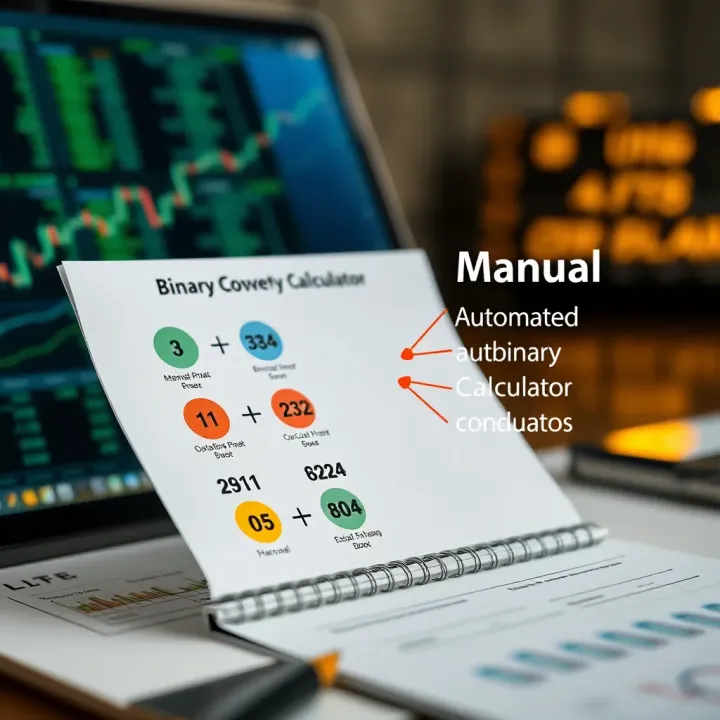
When compared to manual methods, using a binary conversion calculator offers clear advantages. Firstly, time efficiency is significant. Manual conversions, especially for long numbers, can take several minutes and multiple steps. Calculators perform these instantly, helping professionals keep their workflow smooth without unnecessary delays.
Secondly, accuracy and error reduction come naturally with calculators. Humans can easily mistake digits or miscalculate remainders while converting manually, leading to bugs or faulty data interpretation. With a calculator, every decimal-to-binary or binary-to-decimal conversion is precise, reducing the chance of costly errors—an important factor in fields like software testing or hardware diagnostics.
Lastly, these calculators offer ease of use for beginners. Someone learning computer science need not struggle with memorising division or multiplication by two. The tool presents results immediately, encouraging better understanding through experimentation. Plus, features like step-by-step conversion displays or inbuilt help guides make the learning curve gentler.
Using a binary conversion calculator is both a convenience and a necessity in environments where fast, reliable number system conversions save time and prevent costly mistakes.
In summary, the calculator’s core functions let you switch between important number systems effortlessly, while its advantages over manual work make it an indispensable aid for learners and professionals alike.
Using a binary conversion calculator properly can save you considerable time and reduce mistakes often made in manual conversions. These tools not only simplify the process of changing decimal numbers into binary but also help you grasp the intricacies behind various number systems quickly. This is particularly useful for traders analysing binary-coded data or educators explaining computing basics in classrooms.
Start by inputting the decimal number you wish to convert. Most calculators allow you to key in the number directly, whether large like ₹5,00,000 or small single-digit values. Ensuring that you enter the number correctly is key, since any error here will affect the entire conversion process. For example, if you enter 255 instead of 256, the binary output will be entirely different.
Next, choose the type of conversion you want—commonly from decimal to binary or vice versa. Some calculators offer conversions to other bases like octal or hexadecimal, which might be necessary depending on your purpose. This flexibility means you don't have to hunt for multiple tools; instead, everything is within one interface, perfect when working on software debugging or network addressing tasks.
Once converted, the calculator provides the binary equivalent, often displayed clearly with spacing or grouping for easier reading. Understanding what this output means helps you work further; for instance, binary 1010 corresponds to decimal 10, which may represent flags in a software system or settings in an electronic device. Recognising these patterns adds practical value beyond mere number translation.
Good calculators support different bases such as decimal, binary, octal, and hexadecimal, all accessible in one place. This feature is particularly helpful when dealing with related fields like microcontroller programming or digital circuit design, where multiple number representations are common. Rather than switching between apps or websites, these all-in-one tools streamline your workflow.
Some binary conversion calculators let you review past conversions or save frequently used values. This is handy when comparing several related numbers or when revisiting a calculation done earlier. For investors analysing encoding schemes in market algorithms or educators preparing lesson plans, keeping a history avoids repeating work and speeds up the process.
Certain calculators go beyond simple conversions by offering interactive guides or explanations about each step. For those new to binary concepts or preparing for competitive exams with computer science elements, this added support can clarify confusing bits and build confidence. It transforms the tool from a mere utility into a learning partner.
Using the right features can turn a basic calculator into a powerful aid for both studying and professional tasks. Choosing one with tailored functions for your specific needs makes a big difference.
By following these steps and leveraging advanced features, you ensure that your use of a binary conversion calculator is both effective and insightful, whether you are analysing data, teaching students, or working on electronic projects.
Binary conversion calculators play a significant role beyond just number crunching; they serve as essential tools across education and professional fields. Understanding their practical uses helps clarify why learning to operate them effectively benefits both students and professionals working with digital systems.
For students, especially those studying computer science or electronics, grasping binary concepts is fundamental. Binary conversion calculators simplify the process of converting decimal numbers to binary and vice versa, providing immediate feedback and reducing errors. This hands-on approach helps learners see how computers interpret data, making abstract concepts more tangible.
In Indian classrooms where resources may be limited, these calculators offer an accessible way to practice conversions without needing manual methods that can be tedious and error-prone. Using calculators equipped with explanations further reinforces understanding, making them invaluable teaching aids.
Many competitive exams including those for engineering entrances like JEE, or government IT roles, test binary-related questions. Candidates often struggle with manual binary arithmetic under time pressure. A binary conversion calculator not only aids in rapid practice but also familiarises exams takers with conversion techniques and error checking.
For aspirants preparing for these highly competitive tests, using such calculators improves speed and accuracy during mock tests or self-study. It also helps in reinforcing concepts like bitwise operations which are common in exam syllabuses.
In software development, binary conversion calculators support debugging processes, especially in low-level programming languages where bit manipulation is frequent. Developers use these calculators to quickly convert values and verify outputs during testing.
For example, while writing code involving masks or flags, checking binary equivalents helps identify logical errors. This reduces debugging time and enhances code quality, contributing directly to faster delivery cycles.
Data networking relies heavily on binary data formats, such as IP addresses in IPv4 which use dotted decimal representation but are handled in binary internally. Network engineers use binary conversion tools to translate and troubleshoot these addresses or subnet masks.
Similarly, hardware designers working on circuits or microcontrollers convert decimal sensor readings into binary signals. Accurate binary conversions ensure the hardware behaves as expected, maintaining data integrity.
Using binary conversion calculators doesn’t just save time; they reduce mistakes and deepen understanding across educational and professional spectrums.
In summary, binary conversion calculators serve diverse practical applications — from helping students crack exams to aiding professionals in critical technical tasks. Their role in simplifying complex binary math makes them essential in both learning and real-world computing environments.
Selecting the right binary conversion calculator can save you time and improve accuracy, especially if you work frequently with number systems. Whether you are a trader dabbling in algorithmic trading, an educator preparing computer science lessons, or a software analyst debugging code, the right tool impacts both efficiency and convenience. Considering specific features and device compatibility helps you pick a calculator that fits your workflow without frustration.
Accuracy is the foundation of any binary conversion calculator. A tool that miscalculates can lead to faulty data interpretation, which is critical in fields like networking or software development. For example, when debugging binary-encoded protocols, even a single wrong bit conversion can produce incorrect results downstream. Hence, choose calculators that have a proven track record or positive user feedback regarding their precise calculations. Some web-based calculators undergo regular updates to fix bugs and improve conversion algorithms, which is a sign of reliability.
A user-friendly interface ensures you spend less time navigating and more time getting results. Intuitive design, clear input fields, and immediate feedback are essential. Suppose you are teaching binary concepts to students; an interactive calculator with colour-coded steps or explanations alongside conversions can enhance understanding. Besides desktop availability, accessibility means the tool should perform smoothly on mobiles and tablets, as users often switch between devices. Also, calculators supporting local languages or simple English text cater better to a wider Indian audience.
Your device ecosystem matters because not every calculator runs on all platforms. For instance, Windows-only desktop programs won’t help if you depend on your Android mobile or Chromebook. Web-based calculators that work across browsers such as Chrome, Firefox, and Edge offer maximum flexibility. Moreover, offline tools that do not require internet access are useful in areas with connectivity issues or for security-sensitive work. Check if the calculator app supports multiple operating systems and works smoothly offline when needed.
Many web-based binary conversion calculators are free and instantly accessible without installation. Websites like RapidTables or CalculatorSoup provide quick conversions and explanations. Additionally, apps like "Binary Converter" on Google Play offer mobile-friendly interfaces with extra features like history tracking. For Indian users, apps supporting data saving via cloud or local storage help in managing frequent conversions during study or work. Regular online updates also mean you get the latest improvements.
Offline software like "Windows Calculator" (built into Windows 10/11) supports conversions between binary, decimal, octal, and hexadecimal without internet dependency. Indian software firms sometimes develop specialised tools that include regional language support and compatibility with formats used in Indian engineering courses or exams like GATE or JEE. These programmes often come with additional tutorials or batch conversion options useful for students and professionals alike. For example, a Bengaluru-based software firm offering a multilingual binary calculator app can bridge language barriers for learners outside urban centres.
Choosing the right binary conversion calculator boils down to balancing accuracy, ease of use, and device compatibility based on your specific needs and work environment.
By assessing these criteria carefully, you avoid common pitfalls like errors from unreliable tools or frustration from poor interfaces, letting you focus on the conversions themselves.
Explore how to convert octal numbers to binary easily using calculators 🧮. Learn manual methods, common issues, and applications in computing and electronics.

🔢 Understand how online binary calculators simplify converting and computing binary numbers, their uses, and tips to choose and use them effectively.
Explore how letters convert to binary code 🔢, understand encoding methods, and discover tools that simplify letter to binary conversion for computing and telecom.

🔍 Compare Linear Search and Binary Search methods, their efficiency, use cases, and limitations to choose the best search for your data needs.
Based on 14 reviews