
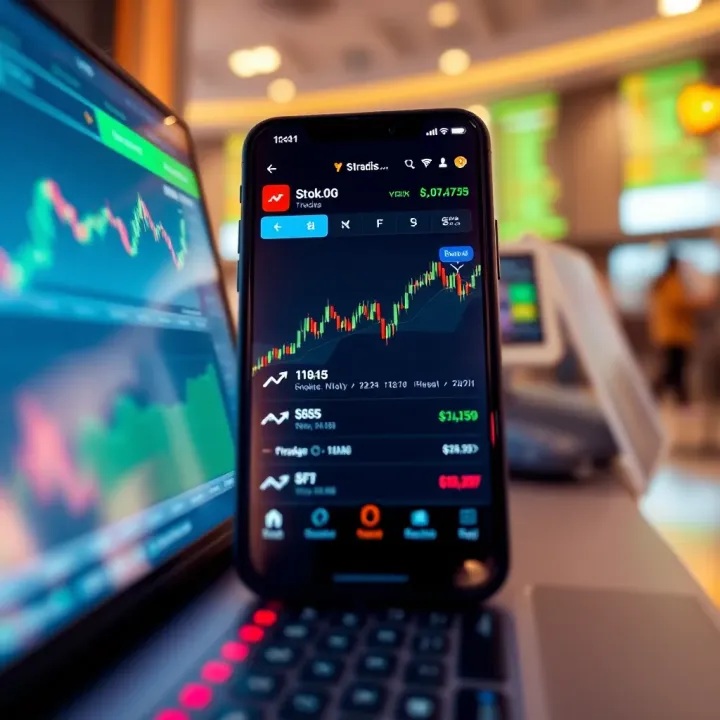
Choosing the Best Online Trading App in India
Discover the top online trading apps in India 📱, understand their features, costs, security, and get practical tips to choose the best platform for you. 🇮🇳💹
Edited By
Emily Hart
Bank Nifty trading has gained significant traction among Indian traders due to its volatility and potential for quick returns. However, choosing the right trading app makes a real difference in how effectively you can tap into these opportunities. The app you pick should offer more than just basic buy-sell features; it needs to align with your trading style, budget, and security needs.
Indian markets have many Bank Nifty trading apps, each claiming to be the best. So, how do you sift through them? You start by understanding what’s most relevant for your trading routine. Some apps excel in real-time data streaming, while others focus on user experience or offer lower brokerage charges. The right balance depends on what you prioritise.

A reliable Bank Nifty trading app is not just about flashy features; it must ensure quick order execution, strong security protocols, and transparent pricing.
Look for apps that integrate seamlessly with the National Stock Exchange (NSE) and provide up-to-date Bank Nifty index data. Features like live charts, advanced technical indicators, and easy market watchlists are key for active traders. For those just starting, an app with a simple interface and educational resources can be more helpful.
Security is paramount. Since trading apps deal with sensitive financial information, they must comply with guidelines set by the Securities and Exchange Board of India (SEBI) and employ encryption to protect user data. Multi-factor authentication adds a layer of safety that should not be overlooked.
Cost also plays a big role. Brokerage fees, transaction charges, and account maintenance fees differ widely. Some apps offer zero brokerage for delivery trades but may charge extra for intraday or options trading, which is common with Bank Nifty. Carefully compare costs relevant to your trading frequency and style.
Finally, keep in mind common user challenges like app crashes during high volatility, delays in order execution, or lack of customer support responsiveness. Choose an app with positive user reviews and reliable technical support to avoid surprises when markets move fast.
This guide will help you understand the features to look for in Bank Nifty trading apps, so you can make an informed choice tailored to your needs.
Bank Nifty holds a significant place in India’s financial markets because it reflects the performance of the banking sector, which is a core component of the economy. It comprises the 12 most liquid and large capitalised banking stocks listed on the National Stock Exchange (NSE). Understanding Bank Nifty is essential for traders because it offers a focused snapshot of banking stocks, enabling them to track sector trends and make informed decisions.
Bank Nifty is an index that measures the combined value and performance of select banking stocks. Unlike the broader Nifty 50 which covers multiple sectors, Bank Nifty specifically covers banks such as HDFC Bank, State Bank of India (SBI), ICICI Bank, Axis Bank, Kotak Mahindra Bank, and others. Since the banking sector is sensitive to economic changes, interest rates, and policy announcements, Bank Nifty often exhibits volatility that traders can utilise for short-term or long-term gains.
Trading Bank Nifty attracts many investors due to its high liquidity and volatility. The index moves sharply in response to RBI policy changes, credit growth data, and global market sentiments. For example, when RBI cuts interest rates, banking stocks often react positively, pushing Bank Nifty upwards. This makes it possible to capitalise on both rising and falling markets through futures, options, or intraday trading. Additionally, the substantial trading volume ensures narrow bid-ask spreads, reducing transaction costs for active traders.
There are different approaches to trading Bank Nifty. Trend following strategies leverage sustained price movements—if Bank Nifty is steadily rising, traders buy call options or futures. Conversely, range trading suits periods when the index moves within a band, with traders buying near support and selling near resistance. Another popular method is using options strategies like collars or iron condors to limit risk while benefiting from expected market stability or volatility. Successful traders often combine technical indicators such as moving averages and RSI with fundamental data like policy announcements.
Understanding the nature of Bank Nifty and its market behaviour will help you pick a trading app that suits your style and needs. Knowing what the index represents lets you choose features focusing on relevant data, real-time updates, and risk controls.
This foundation prepares you to evaluate and select Bank Nifty trading apps that align with your trading goals and risk appetite.
Choosing the right Bank Nifty trading app hinges on key features that can significantly affect your trading experience and results. These features are not just technical add-ons but practical tools that help you respond quickly to market moves, manage risk, and protect your investments effectively.
Real-time data is the backbone of any trading app, especially for fast-moving indices like Bank Nifty. Without current market prices, making timely decisions becomes guesswork. An app should provide live updates, detailed charts, and analytical tools such as moving averages, RSI (Relative Strength Index), and MACD (Moving Average Convergence Divergence) to help you understand market trends at a glance. For example, Zerodha Kite's advanced charting with multiple timeframes can help traders quickly spot entry and exit points.
A clean, intuitive interface reduces errors and saves time. Bank Nifty traders often face volatile markets where seconds count, so apps must be easy to navigate on mobile screens of all sizes—sometimes under 5km commute conditions or quick breaks. Features like simplified order placement, clear button layouts, and easy access to watchlists can enhance focus. Think about apps like Angel Broking, known for an uncluttered design that makes complex actions straightforward.
Speed affects profit and loss directly in Bank Nifty trading. A delay of a few seconds can drive prices up or down significantly. Look for apps with reputation for fast order execution and minimal downtime. This reliability is critical during times of market volatility such as RBI policy announcements or quarterly bank earnings, where many traders act simultaneously. Upstox Pro has often been highlighted for quick trade execution and system stability.
Effective risk management can save your capital. Choose apps that allow setting custom stop-loss orders and trigger alerts on price movements or volume spikes. These alerts help in timely decision-making without constantly staring at screens. For instance, an app sending notifications when Bank Nifty crosses certain support or resistance levels helps you act quickly on market changes.
Trading apps handle sensitive data and money, making security indispensable. Features like two-factor authentication (2FA), biometric logins, encryption of personal information, and secure payment gateways are essential. Apps regulated by SEBI (Securities and Exchange Board of India) and complying with RBI guidelines offer better assurance. Always check if the app regularly updates its security protocols, guarding your investments and personal details.
In volatile markets like Bank Nifty, a well-equipped trading app is your sturdy ship, navigating fluctuations while shielding you from avoidable risks.
By focusing on these key features, you ensure your chosen Bank Nifty trading app matches your trading style, offers timely information, and safeguards your interests effectively.
Choosing the right trading app for Bank Nifty can make a big difference in your trading experience and results. India’s financial market has several popular apps that stand out due to their features, fees, and user support. Let’s look closely at some well-known apps to understand their practical advantages.
Zerodha Kite is one of the most widely used trading apps in India, especially among Bank Nifty traders. It offers a clean, user-friendly interface that makes tracking market movements straightforward even during volatile sessions. The app supports advanced charting tools with indicators, which traders heavily rely on for technical analysis. For example, you can set multiple candles, overlays, and oscillators to spot trends before entering a trade.
Speed and reliability are another strength. Zerodha Kite executes Bank Nifty trades with minimal lag, essential during the fast-moving expiry days. The integration with other Zerodha services like Coin (for mutual funds) provides a one-stop experience. Overall, if you prioritise reliability and advanced analysis from a trusted platform, Zerodha Kite fits well.
Upstox Pro stands out with its powerful analytics and affordability. The app offers real-time market depth and quick order placement, which helps traders act swiftly on Bank Nifty movements. The highlight is the extensive range of technical charts and drawing tools that traders can customise, catering well to both intraday and short-term trading strategies.
Moreover, Upstox’s partnership with Reliance Securities adds robustness to its backend, ensuring uptime even during market surges. The interface, though dense with features, is navigable once you get the hang of it. For traders looking for detailed charts and a slightly lower brokerage compared to some rivals, Upstox Pro offers a practical balance.
Angel Broking’s app is known for combining ease of use with intelligent features. The app offers voice-assisted trading commands and personalised recommendations based on your trading habits. This can be particularly useful if you prefer a semi-automated approach or want help spotting opportunity in Bank Nifty options.
The app also includes useful risk management tools, such as trailing stop-losses and margin calculators, which many traders overlook until they face losses. Its integration with Angel’s advisory services provides an edge for those who want expert opinions alongside their trades. This app suits traders who like a hybrid experience of learning while trading.
Brokerage cost often dictates app choice since frequent Bank Nifty trading can become expensive with high fees. Zerodha charges a flat fee of ₹20 per executed order for equity and F&O segments, which works well for high-volume traders. Upstox Pro similarly offers flat ₹20 or 0.05% per trade, whichever is lower. Angel Broking also maintains a competitive ₹20 per trade charge.
Other charges like platform fees or GST are mostly standard across apps. However, some apps may have hidden fees for features like real-time data or SMS alerts, so traders should check all costs upfront before subscribing.
Quick support is vital when glitches occur during trading, especially with Bank Nifty’s tight expiry deadlines. Zerodha and Angel Broking offer 24/7 customer support through chat, phone, and email. Upstox also provides multiple support channels but might not be as prompt during peak hours.
Besides official support, community forums and social media groups play a big role. Zerodha’s active user community often shares scripts, strategy tips, and troubleshooting advice, which benefits beginners and experienced traders alike. Similarly, Angel Broking’s webinars and educational content help users get more confident in Bank Nifty trading.
Picking the right app depends on balancing features, cost, and support. Consider apps like Zerodha Kite for stability, Upstox Pro for detailed analytics, and Angel Broking for a guiding hand in your trades.
Choosing the right Bank Nifty trading app is vital for effective decision-making and smooth execution. Every trader’s needs differ, based on trading style, experience, and risk appetite. Thus, understanding your personal requirements and matching them with the app’s capabilities improves your chances of success while avoiding unnecessary complexity.
Start by analysing how you trade. Are you a day trader looking to place multiple quick orders, or do you prefer swing trading with longer holding periods? For instance, a day trader benefits from lightning-fast order execution and real-time price feeds, while a swing trader may prioritise detailed technical analysis and alerts. Evaluate your available time, capital, and risk tolerance. If you rely heavily on technical indicators, choose apps that support advanced charting tools.
List features that matter most to you, then check if the app delivers them efficiently. Key features may include:
Real-time market data updates
Customisable watchlists
Interactive charts with indicators
Secure payment and fund transfer options
Low brokerage and transparent fee structure
For example, Zerodha Kite offers excellent charting tools and a user-friendly interface, making it suitable for both beginners and experienced traders. Meanwhile, Angel Broking App provides personalised advisory services integrated with trading, which might suit traders needing guidance. Compare apps on these features rather than marketing hype.
Most leading apps provide free demos or paper trading modes. Use these to familiarise yourself without risking money. Testing allows you to check responsiveness, ease of navigation, and bug presence. For instance, you might find it cumbersome to navigate between different market views or encounter delays in order confirmation. Such issues are deal-breakers for active traders. Be patient during trials, trying out various functions before committing.
Safety cannot be overlooked in financial trading. Choose apps registered with the Securities and Exchange Board of India (SEBI) and compliant with data protection laws. A trustworthy app encrypts sensitive information and uses two-factor authentication to restrain unauthorised access. For example, apps like Upstox Pro follow strict RBI and SEBI guidelines, giving traders added confidence. Avoid apps with poor user reviews related to hacking or fund withdrawal delays.
Picking the right Bank Nifty trading app takes time, but aligning it with your trading style and ensuring security safeguards your capital and improves trading efficiency. Always prioritise subtle app behaviour over flashy features.
By carefully assessing your habits and trying apps hands-on, you’ll find options that truly meet your needs rather than following popular trends blindly. This practical approach lets you trade Bank Nifty more confidently and comfortably on your mobile device.
Trading Bank Nifty on mobile apps demands more than just picking a good platform; knowing how to use the app's tools effectively makes a real difference. Mobile trading means quick decisions in volatile markets, so equipping yourself with practical techniques improves your chances of success. Let’s look at key tips that help you navigate Bank Nifty trades confidently.
Watchlists let you monitor a select group of stocks or indices, like top Bank Nifty constituents, at a glance. By setting up watchlists in your trading app, you save time otherwise spent scrolling through numerous securities. For example, if you track SBI, HDFC Bank, and ICICI Bank together, you get instant updates on their price movements.
Custom alerts further sharpen your edge. You can configure notifications for price targets, volume spikes, or technical triggers. Say you want a buzz when Bank Nifty hits 40,000 points or when a stock crosses its 20-day moving average — the app can alert you immediately. This way, you won’t miss crucial entry or exit points while away from the screen.
Technical indicators like Relative Strength Index (RSI), Moving Average Convergence Divergence (MACD), and Bollinger Bands offer insights into market trends and momentum. Experienced traders use these to spot overbought or oversold conditions to time their trades better.
While apps provide many indicators, it’s best to focus on a few that suit your trading style. For instance, a trader aiming for short-term trades might rely on 5-minute RSI, while a swing trader could watch daily Bollinger Bands. Avoid cluttering your chart with too many indicators, which leads to confusion rather than clarity.
Bank Nifty moves fast, so controlling losses is essential. Your trading app must support stop-loss orders, which automatically close a position when a certain loss threshold is reached. This stops minor setbacks from turning into larger hits that drain your capital.
Set stop-losses based on market volatility and your risk tolerance. For example, if Bank Nifty is swinging 300 points daily, placing a stop-loss just 50 points away may trigger frequent exits. Adjusting stop-losses dynamically, using tools like trailing stops, also helps lock in profits without staying exposed unduly.
Updates bring bug fixes, new features, and most importantly, security patches. Using an outdated version might expose you to glitches that can delay order execution or compromise your data.
Besides tech, staying informed through news feeds integrated into apps or trusted financial news sources keeps you alert on RBI policy changes, economic announcements, or corporate results that influence Bank Nifty.
Effective Bank Nifty trading on mobile depends on preparation and timely action. Use watchlists and alerts to stay ahead, rely on select technical indicators, manage risks smartly with stop-losses, and keep your app updated to avoid surprises.
Following these practical tips helps you use your Bank Nifty trading app optimally, making your trades more disciplined and potentially profitable.
Discover the top online trading apps in India 📱, understand their features, costs, security, and get practical tips to choose the best platform for you. 🇮🇳💹

Find the most reliable trading app in India 📱 with insights on security 🔒, fees 💰, user-friendly experience, compliance ✔️, and support 🤝 for smarter trading.

Find the best low brokerage trading app in India 📱 Compare charges, app features, security, and support to invest smartly within your budget. 💹
📱 Discover how to pick the best online share trading app in India 🇮🇳 with tips on features, safety, and smart trading strategies for all skill levels.
Based on 14 reviews