
Live Paper Trading Apps: A Guide for Indian Traders
📱 Learn how live paper trading apps help Indian traders practice strategies risk-free using real market data. Get tips, features, and top apps! 📈
Edited By
Henry Spencer
Paper trading websites provide a safe space to test your trading strategies without using real money. For Indian investors, these platforms offer a practical way to get familiar with market behaviour, understand order types, and build confidence before risking actual capital.
Unlike demo accounts with limited features, the best paper trading websites simulate real market conditions closely. This includes live price feeds, realistic order execution, and access to various asset classes such as equities, commodities, and derivatives relevant to the Indian markets.
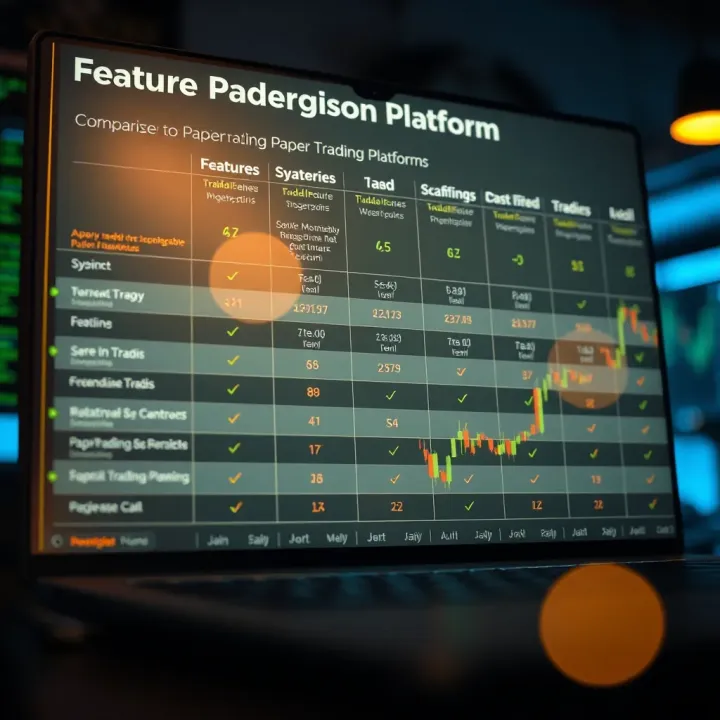
Using paper trading effectively lets you learn from mistakes without financial loss, which is crucial especially when you are starting out or trying new trading methods.
When selecting a paper trading platform, consider aspects like the ease of interface, access to Indian market data (NSE, BSE), availability of research tools, and the flexibility to customise your trading environment. Some platforms even allow you to set up systematic investment plans (SIP) with virtual funds or backtest strategies over historical data.
For example, websites like Zerodha's Varsity offer educational support alongside simulated trading features, while others like Upstox and Moneycontrol provide comprehensive market data and virtual portfolios. Comparing these options in the Indian context helps you pick a platform that suits your style and learning pace.
In the following sections, we will explore important features to look out for, examine popular paper trading websites available in India, and share tips on how to make the most of virtual trading for improving your real investment decisions.
Paper trading offers a risk-free way for traders and investors to practise buying and selling financial instruments without using real money. It simulates actual market scenarios, enabling users to test strategies, observe outcomes, and improve their decision-making skills before committing real funds. This makes paper trading particularly valuable for beginners who want to learn the ropes and for experienced traders who wish to refine new techniques.
At its core, paper trading is virtual trading where users trade financial assets on a simulated platform using notional money. This allows one to mimic real market operations—such as placing orders, tracking price movements, and managing portfolios—without any financial risk. For example, an investor interested in Indian equities can use paper trading on platforms like Zerodha's Console or NSE Paathshala to experience real-time market data and order execution without risking actual capital.
The key difference between paper trading and live trading lies in the financial stakes involved. While paper trading uses virtual funds, real trading deals with genuine money and all the emotions that come with it. The absence of real monetary consequences in paper trading means users might take risks they usually wouldn’t, so it lacks the psychological pressures that affect real trading decisions.
Learning without financial risk is the biggest draw of paper trading. For someone fresh to stock markets, it offers a hands-on environment to understand concepts like order types, market timing, and portfolio management without worrying about losing money. For instance, a young investor without much experience can use paper trading to master limit orders or stop-loss placements before applying these tools in real trades.
Testing strategies and building confidence is another major benefit. Traders can try out various approaches—such as swing trading, day trading or options strategies—to see how they perform over time. If a strategy consistently shows positive returns in paper trading, it helps build confidence to use it in the actual market. Conversely, it can highlight flaws without burning money.
Besides, paper trading helps in understanding market dynamics by exposing users to real-time data and fluctuating market conditions. This exposure helps grasp how factors like volume, volatility, and news events impact prices. For example, while using an Indian market simulator, observing how an RBI policy announcement affects banking stocks can provide valuable insights that are hard to gain otherwise.
Paper trading bridges the gap between theory and practice, giving traders a safe space to learn, experiment, and adapt before stepping into the real market.
By offering practical experience without risk, paper trading platforms serve as an essential tool in a trader’s or investor’s toolkit, helping sharpen skills and prepare for live market participation.
Selecting the right paper trading website involves more than just signing up and clicking through. Certain features matter vastly when it comes to practising effectively and improving your skills. These features determine how realistic the experience feels, how much you can learn, and how smoothly you can navigate the platform.

Ease of navigation is fundamental. Imagine logging into a paper trading site only to find options scattered all over with unclear labels. This frustrates the user and eats into your learning time. A simple, clean layout with intuitive menus helps you focus on trading rather than figuring out how to place orders or access charts. For example, a clear dashboard showing your virtual portfolio and current prices at a glance makes keeping track easier.
Mobile and desktop support define when and where you can trade. Many traders prefer the convenience of mobiles to keep an eye on markets throughout the day, while desktops often offer better charting and multitasking. The best paper trading sites offer seamless access on both. Zerodha’s platforms, for example, provide desktop and mobile-friendly versions, allowing you to switch without losing work. That way, you don’t miss out on practising just because you’re away from your computer.
Stocks, commodities, derivatives form the foundation of any serious trading practice. If a platform only offers stocks, you miss out on practising options or commodity futures, which are popular in Indian markets. Platforms like Upstox Pro let you experiment across these instruments, which broadens your understanding and prepares you better for diverse markets.
Indian and global markets availability expands your horizon. Some traders eye opportunities beyond the Sensex or Nifty, wanting exposure to US stocks or global commodities. A paper trading site that covers multiple markets helps Indian investors familiarise themselves with different time zones, trading hours, and product behaviours. That said, if your focus is purely Indian markets, a specialised platform like NSE Paathshala — with direct NSE data — serves the purpose well.
Live or delayed market data greatly affect the realism of your experience. Using outdated prices can mislead you about entry and exit points, giving a false sense of security or risk. Live data, even if slightly delayed (by a few seconds), replicates market conditions close to reality. For instance, Upstox provides near real-time data in its simulator, which adds value.
Order execution speed and realism determine if your trading decisions play out as they would in actual markets. Some sites instantly fill all orders, which doesn’t reflect real-world slippage or order book depth. Good simulators mimic delays, partial fills, or order rejections based on market liquidity — teaching patience and risk evaluation. This level of detail prepares you better for live trading challenges.
Charts and technical indicators are the bread and butter for strategy development. Without access to reliable charts, you’d be flying blind. Quality platforms provide multiple chart types, drawing tools, and popular indicators like Moving Averages, RSI, or MACD. This enables you to test patterns and refine signals before committing real money.
Educational content and analytics complement practise sessions by explaining what works and what doesn’t. Some paper trading sites bundle tutorials, webinars, or trade analysis tools that break down your performance. This feedback loop is especially useful for beginners, allowing them to learn from mistakes early on and gradually build sophistication.
Focusing on these features ensures your paper trading experience is practical and beneficial, giving you the confidence and skills to enter live markets with a sharper edge.
In summary, look for paper trading websites that combine a user-friendly design with varied instruments, real-time-like data, and comprehensive tools. This balance helps you simulate trading closely to real life, setting a solid foundation for your investment journey.
Choosing the right paper trading platform tailored for Indian users can significantly impact how effectively you practise and polish trading skills without risking real money. Different websites offer varied features, market access, and user experiences. For instance, some platforms focus on Indian markets exclusively, while others offer exposure to global exchanges. Considering these aspects helps traders identify the best fit according to their learning goals and preferred markets.
Features and advantages: Zerodha Varsity is widely respected for its rich educational content on trading and investing, crafted clearly for beginners and advanced users alike. Console, Zerodha's portfolio management tool, complements Varsity by integrating seamless paper trading options. This combination offers a practical environment where learning theory goes hand-in-hand with virtual practice. For Indian traders, this means they benefit from a platform that understands local market nuances and regulations.
Integration with Kite platform: Zerodha's integration with its Kite trading platform means that paper trading orders and analysis follow the same workflows as actual trading. This closeness gives users a realistic feel for order placements and market reactions. Traders get hands-on experience with market depth and execution without risking capital. It also simplifies the transition from paper to live trading since the user interface and functionalities remain consistent.
User experience and market access: Upstox Pro’s virtual trading feature offers a clean, intuitive interface that is quite similar to its live trading application. Indian traders gain access to a broad range of instruments like stocks, derivatives, and commodities available on Indian exchanges such as NSE and BSE. This familiar market coverage allows users to test strategies accurately reflecting the Indian trading environment.
Strengths and limitations: A key strength of Upstox Pro Virtual Trading is its real-time data feed, ensuring simulation closely mimics live market conditions. However, it currently lacks advanced educational resources integrated directly into the platform, which could be a drawback for beginners who prefer guided learning alongside practice. This means users might need to supplement learning with external materials.
Global market simulation: Investopedia offers a comprehensive paper trading simulator with exposure to multiple global markets, including the US stock exchanges. This feature is beneficial for Indian traders interested in international diversification or understanding global market dynamics. The platform allows trading of stocks, ETFs, options, and mutual funds virtually.
Suitability for Indian traders: Despite its global focus, Investopedia Simulator’s interface and educational resources are mostly tailored for US markets, which might limit instant applicability for Indian regulations and market structures. Traders new to Indian markets may find it less relevant for everyday practice, but seasoned traders looking to explore global instruments will find value in this simulation.
Official platform with NSE data: NSE Paathshala comes directly from the National Stock Exchange of India, offering authoritative, accurate market simulation based on real NSE data. This gives Indian traders precise exposure to Indian equities and derivatives, improving the reliability of paper trading outcomes.
Educational benefits and features: The platform offers not just trading practice but also well-structured educational modules that help users understand market mechanisms and trading rules. This dual approach is particularly useful for students and beginners preparing for competitive exams like the NISM certification or those intent on entering the stock market with solid foundational knowledge.
Selecting a paper trading platform that matches your trading style and learning needs can save time and frustration. Focus on platforms offering realistic data, useful tools, and relevant educational support for the Indian market to maximise your practice benefits.
Paper trading can teach you a lot, but only if you approach it with clear strategies and discipline. Simply clicking through trades won't help much unless you set realistic goals, track your progress carefully, and prepare yourself for live markets. In this section, we'll explore practical tips that help you gain solid experience and confidence.
Defining clear objectives is the backbone of effective paper trading. Before you start, decide what you want to achieve—whether it's mastering intraday trading, testing long-term investment ideas, or understanding technical analysis. For example, a trader aiming to build confidence in options trading should focus on that specific area instead of randomly experimenting. Clear objectives prevent you from losing focus and give direction to your practice.
Emulating real market conditions means modelling your trades under circumstances you’ll likely face in real life. This could include accounting for factors like brokerage charges, slippage, or even time constraints. For instance, some platforms don’t charge virtual brokerage fees, but you should factor them into your calculations to understand how they cut into profits or increase losses. Simulating market gaps and volatile sessions is also useful to avoid developing unrealistic expectations.
Maintaining a trading journal is essential for learning. Record details like why you entered a trade, entry price, stop loss, target, and emotions during the trade. It’s surprising how many traders overlook this. Over time, you’ll spot patterns, such as repeated mistakes or strategies that work better. For example, a journal might reveal that you panic-sell during market dips, which helps identify emotional triggers that need control.
Regular review of trades goes hand in hand with journaling. Dedicate time weekly or monthly to analyse your trades systematically, checking win rates, average gains, and losses. Use this to refine your strategy. A trader might notice that although winning trades are fewer, the profits on winners exceed losses, indicating a good risk-reward ratio. Conversely, if losses pile up, it might be time to tweak your strategy or practise more.
Recognising readiness means knowing when to move from paper trading to live markets. Consistently applying your strategy profitably over a few months, handling stressful situations calmly, and managing risk effectively are signs you’re ready. Remember, paper trading doesn’t involve real money, so emotional responses differ. If you experience simulated losses but keep your strategy intact, that’s a good indication.
Risk management techniques acquired in paper trading must carry over to live trading. Whether it’s setting stop losses, deciding position sizes, or diversifying trades, strong risk control limits real losses. For instance, using only 1-2% of your trading capital per trade in live markets is a common rule. Practising such discipline in paper trading prepares you to avoid big shocks.
Paper trading is not just a training ground but also a testing phase for discipline and risk control. Following this advice will help you turn your virtual successes into real-world gains.
Applying these tips will ensure that your practice on paper trading websites gives you meaningful insights, building skills that work in actual markets. Keep your goals clear, learn from each trade, and slowly bridge the gap to live investing with confidence.
📱 Learn how live paper trading apps help Indian traders practice strategies risk-free using real market data. Get tips, features, and top apps! 📈

📊 Learn how to start online forex trading in India with tips on market analysis, account setup, risk management, and key strategies for success.🌍💹

📱 Discover how low deposit trading apps help Indian traders start with small investments. Learn their pros, risks, and tips for smart fund management. 💹
Find the best trading app for Indian investors! Compare top platforms, explore key features & usability, and meet regulatory norms for smarter investing 📈🇮🇳
Based on 11 reviews