

Time Complexity of Optimal Binary Search Trees
📚 Explore the time complexity of Optimal Binary Search Trees, see how dynamic programming shapes their efficiency, and understand practical computation costs.
Edited By
William Turner
Binary search is a classic algorithm widely used to find elements quickly in sorted lists or arrays. Unlike linear search, which checks elements one-by-one, binary search repeatedly divides the search range in half, significantly reducing the number of comparisons required. This efficiency makes it popular in various fields, including trading platforms, database queries, and educational tools.
Understanding the best case time complexity of binary search helps analysts and investors grasp the minimum possible time the algorithm needs to locate an element. Essentially, the best case occurs when the very first element checked matches the target value. In this scenario, the search ends immediately, making the operation extremely fast.
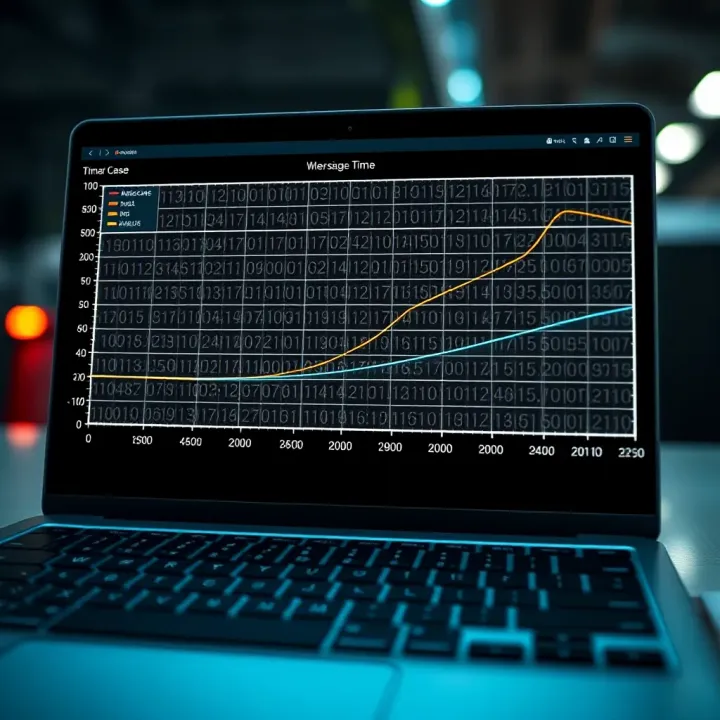
The best case time complexity of binary search is O(1), meaning constant time. This happens when the target is found in the very first check.
To clarify, binary search starts by comparing the middle element of the sorted list with the target. If they match, the search concludes instantly—that's the best case. If not, the algorithm halves the search area and continues, leading to average and worst case complexities.
Here’s a simple example: suppose you want to find the value 50 in a sorted list of numbers from 1 to 100. If the middle element is 50 on the first try, the search stops right there—hence constant time. But if 50 is elsewhere, multiple steps follow.
Key points about best case time complexity in binary search:
Occurs only when the middle element matches the target at the first step
Requires just one comparison
Represents the fastest possible scenario for binary search
By understanding this, traders and developers can gain better sense of binary search’s speed limits. While best case is rare in practical scenarios, knowing it sets a baseline when comparing with average and worst cases, which are typically much slower.
In the next sections, we’ll compare this best case with average and worst case complexities and explore practical implications for system performance.
Binary search is a fundamental algorithm used extensively in computer science for efficient searching within sorted collections. In the context of understanding its time complexity, having a clear grasp of how this algorithm operates is essential. Binary search significantly reduces the number of comparisons compared to linear search, making it a practical choice when dealing with large datasets.
Basic principles of dividing search space: Binary search continuously divides the search space in half to locate a target element. It starts by comparing the target with the middle element of the sorted array. If the target matches, the search ends. Otherwise, it narrows down the search to the half where the element may lie — left half if the target is smaller, right half if it is larger. This halving continues until the element is found or the search space is exhausted. This approach drastically cuts down the number of comparisons needed, especially for large datasets.
Requirements: sorted array or list: The algorithm demands the data to be sorted beforehand. Without sorting, halving the search space loses meaning since the position of elements would be unpredictable. For example, if you search for '₹500' in an unsorted list of prices, binary search fails to decide whether to look left or right of the middle element. Sorting is thus a non-negotiable prerequisite. In practice, this step influences performance because sorting large datasets can be resource-intensive, though once sorted, binary search queries are much faster.
Step-by-step example: Suppose you have a sorted list of stock prices [100, 200, 300, 400, 500, 600, 700] and want to find 500. Start by checking the middle element (400). Since 500 is greater, ignore elements left of 400. Next, consider the right half [500, 600, 700] and check the middle (600). Now 500 is less than 600, so focus on [500]. The middle is 500, which matches the target — search ends successfully. This clear-cut halving reduces search steps from seven to just three comparisons.
Use cases in computer science and software development: Binary search is employed wherever quick lookup within sorted data is required. For instance, databases use it to fetch records rapidly, and version control systems rely on it to find specific revisions efficiently. Many programming languages also integrate binary search in their built-in libraries for sorted collections, ensuring rapid data retrieval without the developer needing to write complex code.
Importance in searching sorted data: Searching sorted data without binary search would mean scanning each item sequentially, which becomes impractical as data size grows. Binary search’s logarithmic time complexity converts potentially hundreds of thousands of comparisons into just a few steps. This efficiency drastically improves application responsiveness, especially in financial software where quick price lookups or transaction verifications are frequent.
Relation with data structures like arrays and binary search trees: Arrays are the most straightforward data structures to apply binary search on due to their indexed nature. Binary search trees (BSTs), on the other hand, naturally follow a divide-and-conquer approach resembling binary search, where each node directs the search to its left or right child based on comparisons. Balanced BSTs can offer search times comparable to binary search on arrays, making them vital for dynamic datasets where insertions and deletions happen alongside lookups.
Mastering binary search’s operation and application is key to appreciating how its time complexity behaves, especially the best-case scenario where the target is found immediately at the middle.
Time complexity is a measure of how long an algorithm takes to run as a function of the input size. For search algorithms like binary search, understanding time complexity helps estimate performance before implementation. It also guides choosing the right method to save time and computational resources, especially in datasets running into lakhs or crores.
Time complexity describes the amount of time an algorithm requires based on input size, usually denoted as 'n'. This measure assumes the input is large enough for the complexity trend to matter. For example, scanning through a sorted array of 1,00,000 elements linearly takes roughly linear time—O(n). But binary search reduces this to around O(log n), showing a significant efficiency gain.
The notations Big O, Omega, and Theta provide ways to describe time complexity from different perspectives. Big O (O) expresses the worst-case upper limit—how the running time grows at most. Omega (Ω) represents the best-case minimum running time an algorithm can achieve. Theta (Θ) captures the tight bound—both upper and lower limits—indicating consistent performance across inputs.
When analysing searches, especially binary search, it's crucial to distinguish best, average, and worst cases. The best case may occur if the target is found immediately, like at the middle index in binary search, leading to constant time O(1). The average case takes into account all possible positions of the target, often resulting in logarithmic time O(log n). The worst case happens when the element is absent or at an extreme end, causing maximum iterations.
Time complexity directly impacts algorithm efficiency. Algorithms with lower complexity finish faster, saving both time and processing power. For instance, in a trading platform analysing stock data with millions of entries, a search algorithm running in O(log n) completes far quicker than one running in O(n). This speed translates to faster decisions and better market responsiveness.
In real-world applications, performance considerations extend beyond raw speed. Efficient algorithms reduce energy consumption on devices, improve user experiences by avoiding delays, and help manage server loads. For example, an investment app searching through portfolios needs quick responses; using algorithms optimised based on time complexity ensures smooth functionality during peak usage.
Understanding time complexity equips you to pick algorithms that balance speed and resource use, which is key in data-heavy areas like finance and analytics.
In this article, exploring the best case time complexity of binary search sheds light on when the algorithm performs optimally and how that influences real-world efficiency and application choice.
The best case scenario in binary search highlights a situation where the search is resolved with the least amount of effort. Understanding this case is crucial for appreciating how efficient binary search can be under ideal conditions, especially when dealing with large datasets common in trading or data analysis. It also helps in setting realistic expectations about the speed of search operations in practice.
The best case arises when the target element happens to be exactly at the middle index of the sorted array or list. Since binary search divides the array into two equal halves each time, hitting the middle element right away means the algorithm finds the answer immediately without needing further steps. This can happen in practice when queries are frequently about the most central or median values in a dataset.
For example, suppose an investor is searching for a stock price that equals the median price in a sorted list of prices. If the price at the middle index matches the target, the search ends at once. This cuts down the number of operations drastically and saves computational resources.
Besides finding the element in the middle, the best case also refers to the scenario where the very first comparison made by the binary search succeeds. That means the target number is found instantly without needing to check either half of the array. This immediate success is particularly useful when frequent lookups happen on values positioned early in the sorted data, helping avoid unnecessary processing delays.
In practical terms, if a stock analyst often looks for a specific benchmark value that frequently occurs at or near the centre of the data, binary search will often complete in one go, making it an excellent choice for such queries.
In the best case, binary search performs in constant time, denoted as O(1). Constant time means the algorithm does its job with just a single comparison regardless of the size of the dataset. Unlike linear search, where time grows with the size of data, here the search doesn't depend on how large the array is.
For instance, if you have a sorted dataset of 1 crore entries, finding the element at the middle index means the search terminates in just one step. This constant time speed is particularly advantageous for high-frequency searching in investment platforms or real-time data dashboards.
Constant time (O(1)) here reflects the dream scenario — when binary search hits the target at once, it outperforms almost every alternative searching method.
The best case stands out because, usually, binary search takes more steps. The average case requires about log₂(n) comparisons, where n is the number of elements, meaning the steps grow slowly as the data size increases. The worst case, similarly, follows O(log n) but happens when the target is at either extreme or not present at all, pushing the algorithm to explore most layers.
So, while the best case's O(1) performance offers a glimpse of maximum efficiency, traders and data analysts should expect more typical performance levels closer to O(log n), especially when datasets are diverse or queries unpredictable.
Understanding the best case helps in appreciating the mechanics of binary search but one should also plan considering average and worst-case scenarios for balanced performance expectations.
Understanding the differences between best, average, and worst case time complexities is key to grasping how binary search performs in various situations. This comparison helps in setting realistic expectations and planning algorithms based on typical and extreme inputs. For example, while the best case occurs when the searched element is exactly at the middle of the array, average and worst cases reflect more common or challenging scenarios.
On average, binary search will halve the search space with each comparison until it finds the target or concludes it isn't present. Typically, this leads to around log₂ n comparisons, where "n" is the number of elements in the sorted array. For instance, in a list of 1,000 elements, about 10 comparisons are generally made to find an element or determine absence.
This logarithmic nature means that the algorithm’s performance improves drastically compared to linear search as data grows larger. Doubling the dataset size only adds one more comparison, which is efficient for large-scale searching, such as looking through millions of stock tickers on an exchange or sorted product lists on an e-commerce platform.
In the worst case, binary search still requires at most log₂ n comparisons, but it fully traverses the halving search process without early hits. The worst case happens when the element is not in the array or lies at an extreme end, such as the very first or last position.
The worst case arises if the searched item is consistently missed at the midpoints tested, pushing the search to the smallest possible subarray. For example, in trading platforms, if a stock symbol does not exist on the list, the search checks multiple midpoints before concluding absence.
When designing systems, knowing these time complexities helps you decide whether binary search is ideal. For sorted data where quick lookups are frequent, binary search’s consistent logarithmic average and worst cases make it suitable. However, if data is unsorted, other methods or data structures like hash maps might be faster.
Being aware of how best, average, and worst cases affect runtime helps in anticipating the system’s responsiveness under different loads. It ensures that critical applications, such as real-time stock trading or inventory management, maintain acceptable speeds consistently, not just sometimes.
Even though the best case of binary search is O(1), it's the average and worst cases that dictate its practical efficiency and reliability in real-world use.
By comparing these cases, you get a clearer picture of the strengths and boundaries of binary search, allowing better algorithm choices for investors, analysts, and developers.
Understanding the practical effects of the best case time complexity in binary search helps professionals anticipate situations where the algorithm performs at its fastest. While the best case might seem too optimistic for daily operations, there are specific scenarios where it does happen and influences decisions on optimising search tasks.
In cases where queries repeatedly target the middle element of a sorted array, binary search achieves its best case time complexity of O(1). For example, suppose you maintain a sorted inventory list of 1 lakh products, and customers often ask about a product that sits near the midpoint. Here, the search returns results instantly, saving time and processing resources. This is common in software dealing with median calculations or round-trip time data where the middle record is frequently accessed.
Immediate access to the central element can accelerate applications like stock market analysis portals, where median price queries occur regularly during trading hours. While such specific use cases are rare, recognising them helps in optimising systems for a known query pattern.
When designing systems that rely heavily on search operations, understanding the best case helps engineers optimise performance for common scenarios. For example, in recommendation engines or database indices, caching the middle element or frequently queried positions can enable the system to exploit the O(1) search time.
In algorithm tuning, developers can adjust data preprocessing strategies, perhaps by arranging elements or requests so that the middle index is a popular search target. This reduces average latency, especially for user-facing applications such as e-commerce websites or mobile apps where response time impacts user satisfaction.
While a best case of O(1) sounds attractive, in practice, most search operations land in average or worst case scenarios. Average case for binary search is O(log n), which already is efficient, while worst case involves multiple divisions of the search space until the element is found or determined absent.
For instance, if the element lies at an unknown position or does not exist in the array, the algorithm must repeatedly check subarrays, increasing time. Traders or analysts cannot depend on hitting the middle element every time; instead, they prepare for the more typical logarithmic behaviour to estimate performance.
Relying solely on the best case might mislead developers into underestimating resource needs or latency. Therefore, systems must be built to handle typical or worst cases gracefully. This means optimising data structures, balancing trees, or supplementing binary search with heuristics to keep search times predictable.
Practical systems incorporate timeouts, fallback mechanisms, or even fallback to linear search in very small or unsorted subsets to maintain customer experience. In sectors like finance or education, where speed and reliability really matter during peak loads, planning for consistent performance avoids surprises and maintains trust.
Understanding the best case helps in recognising opportunities but planning around average and worst cases ensures robustness and reliability in real-life search tasks.
📚 Explore the time complexity of Optimal Binary Search Trees, see how dynamic programming shapes their efficiency, and understand practical computation costs.
🔍 Learn the time complexity of linear vs binary search algorithms, understand their efficiency, working, and when to choose which method for best results.

📚 Dive into optimal binary search trees: basics, optimization methods, algorithms, and comparisons in data structures for students & pros alike.

Learn how linear search and binary search work in C programming 🖥️. Explore their implementation, performance, and when to use each with code examples.
Based on 7 reviews