

Top Chart Patterns for Successful Trading
Discover the most effective chart patterns in trading 📈! Learn practical tips and access useful PDF guides. Perfect for traders in India aiming to sharpen skills.
Edited By
Benjamin Reed
Chart patterns are the backbone of technical analysis, helping traders and investors predict future price movements based on historical price data. These patterns form when prices move in specific formations, signalling potential bullish or bearish trends. In the Indian stock market, recognising these patterns can give you an edge, whether you trade stocks, commodities, or currencies.
Technical analysis relies on visual indicators rather than company fundamentals. Chart patterns like head and shoulders, double tops, triangles, and flags provide visual clues about market psychology and trader behaviour. For instance, a double bottom pattern often suggests a potential price rebound, while a rising wedge might warn of an upcoming decline.

Understanding these patterns equips you to anticipate price swings more confidently. Knowing when a stock like Reliance Industries or HDFC Bank is showing signs of reversal or continuation can help you time your entries and exits effectively.
Successful chart reading requires practice and careful observation, not just spotting shapes but understanding their implications in the current market context.
Some patterns signal bullish moves (prices likely to rise) while others hint at bearish trends (prices expected to fall). For example:
Bullish patterns: Cup and handle, ascending triangle, and bullish flags
Bearish patterns: Head and shoulders, descending triangle, and bearish pennants
Besides recognising these formations, you must consider volume patterns and confirmation signals to avoid false alarms. Increasing volumes during breakouts, for example, strengthen the reliability of the pattern.
To sum up, mastering basic chart patterns helps you make more informed decisions in volatile markets like NSE or BSE. It also improves your ability to identify risk and set stop losses properly.
Such skills work well across different timeframes—from intraday trading to longer-term investing in mutual funds or direct equity. Next, we’ll explore the most common patterns in detail along with tips for spotting them easily on popular Indian trading platforms like Zerodha Kite and Upstox.
Chart patterns form the backbone of technical analysis for many traders and investors. They help in visualising price movements, making it easier to predict future trends based on past behaviour. Understanding these patterns can improve your timing and confidence while entering or exiting the markets. For example, spotting a ‘head and shoulders’ pattern early could signal a potential downward reversal, letting you safeguard your investments.
Chart patterns are recurring shapes formed on a price chart as a security’s price fluctuates. These shapes help traders interpret market psychology by summarising supply and demand dynamics. The patterns indicate potential turning points or continuation of trends, allowing traders to anticipate future price movements. For instance, a double bottom pattern often hints that a falling stock might be about to rise, signalling a buying opportunity.
Inside technical analysis, chart patterns are a key tool because they provide a structured way to analyse price behaviour without relying on fundamental data. Different patterns have standard meanings based on historical performance, serving as signals to traders. Volume data often accompanies these patterns, confirming their validity. For example, a breakout from a triangle pattern with increased volume usually strengthens the signal that the price will move in the breakout direction.
Chart patterns give clues about where the price might head next by highlighting the battle between buyers and sellers. Recognising these setups early helps investors and traders position themselves accordingly—whether to enter a trade, hold an asset, or exit. For example, an ascending triangle often shows bullish pressure stacking up, suggesting prices could rally once it breaks the upper resistance.
Apart from trend prediction, chart patterns help manage risk by setting clear points for stop-loss orders and profit targets. When a pattern completes, traders can measure expected price moves and place stop-loss levels just beyond key support or resistance lines. This approach restricts losses if the market moves against them while allowing profits to run. Such disciplined trade management is crucial in volatile markets like Indian equity or commodity sectors.
Understanding and correctly interpreting chart patterns empower you to make smarter, timely decisions, balancing opportunity and risk in markets that rarely behave predictably.
Reversal patterns are essential for traders and investors as they signal a potential change in the market’s direction. Spotting these patterns early can help you exit losing positions or enter fresh trades at the right moment. For example, if a stock in the Nifty 50 index shows signs of topping out, recognising a reversal pattern quickly could save you from losses or allow you to capitalise on the next downward move.
When markets reverse, prices often shift sharply. Reversal patterns such as the Head and Shoulders or Double Top and Bottom provide visual cues on charts indicating this change. Understanding their formation and behaviour can improve your timing, reduce risk, and support better decision-making in both equity and commodity trading environments.
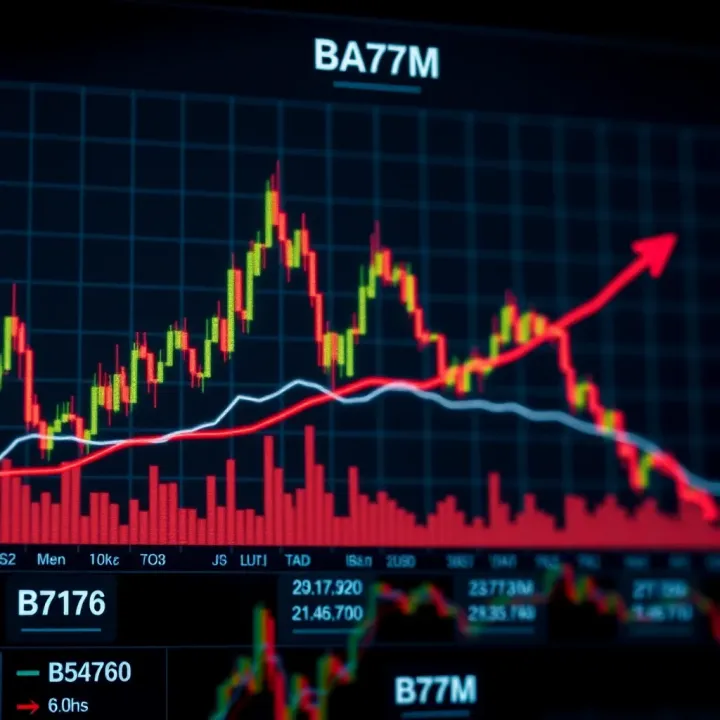
The Head and Shoulders pattern typically marks a trend reversal, mostly from bullish to bearish. It comprises three peaks: two smaller shoulders flanking a taller middle peak, the head. Traders watch the ‘‘neckline’’—a support level connecting the lows between these peaks—as a critical boundary. A break below this line confirms the reversal. Its inverse, the Head and Shoulders Bottom, signals a change from bearish to bullish.
This pattern is practical because it helps distinguish a temporary price rally from a true trend change. For instance, Reliance Industries Limited might form a Head and Shoulders pattern after a prolonged uptrend, warning traders about a possible downturn ahead.
A standard Head and Shoulders points to an upcoming downtrend, as sellers overpower buyers after the head forms. Conversely, an Inverse Head and Shoulders suggests buyers are gaining strength, likely pushing prices higher.
Spotting the difference requires focus on the pattern’s orientation and location in the price chart. For example, in the case of Tata Motors, a downward trend forming an inverted Head and Shoulders might hint at a recovery phase. Recognising these shifts helps you plan entries and exits more effectively.
Double Top and Double Bottom patterns appear as two prominent peaks or troughs at roughly the same price level. A Double Top often follows a bull run where the price hits resistance twice, failing to break higher. Similarly, a Double Bottom marks two dips, signalling strong support and potential bullish reversal.
In practical terms, if the State Bank of India shares face stiff resistance at ₹500 twice and fail to cross, a Double Top may emerge, warning of a price decline. The key is the confirmation on breaking the ‘‘neckline’’ or support level, which confirms the reversal.
Once confirmed, these patterns indicate a shift in the supply-demand balance. A Double Top completion points to sellers gaining control and further price drops, while a Double Bottom signals buyers stepping in, likely leading to an upward move.
For example, a Double Bottom in the crude oil futures on Indian exchanges might prompt traders to take long positions, anticipating higher prices. These patterns, combined with volume analysis, improve the reliability of your trading calls.
Recognising reversal patterns early can turn a risky situation into an opportunity, especially within volatile Indian markets. Always wait for confirmation before acting to avoid false signals.
Continuation patterns are valuable tools traders use to confirm that a prevailing trend is likely to persist rather than reverse. Recognising these patterns helps you stay with the trend, preventing premature exits or rash entries. For example, during a strong uptrend in a stock like Reliance Industries, spotting a continuation pattern signals that the bullish momentum might carry on, encouraging you to maintain your position.
Triangles are popular continuation patterns that indicate consolidation before the market resumes its previous direction. An ascending triangle has a flat upper resistance line and rising lower support, suggesting buying pressure is building. A classic example is visible in Nifty 50 stocks during steady bullish phases. The descending triangle reverses this, with a flat lower support and descending upper resistance, often signalling selling pressure in a downtrend. On the other hand, a symmetrical triangle features converging trendlines, showing indecision and usually leading to a breakout aligned with the prior trend.
Understanding these types helps anticipate market moves accurately. For instance, during a bullish run in Infosys, an ascending triangle breakout might imply a further price rise.
Volume analysis is crucial when confirming triangle patterns. Typically, volume declines during the consolidation phase inside the triangle, reflecting reduced trading activity. Then, a sudden volume spike accompanies the breakout, validating the pattern. Traders watching Tata Motors might see volume dwindle as the stock forms a symmetrical triangle, then jump as it breaks out upward, signalling entry opportunity.
Flags and pennants are short-term continuation patterns, often following sharp price moves known as 'poles'. Flags appear as small rectangular channels slanting against the prevailing trend, whereas pennants form small symmetrical triangles.
Both indicate a brief pause before the trend continues. For example, after a quick rally in Dr Reddy's Laboratories, spotting a flag suggests the uptrend will resume soon. While flags tend to be more structured channels, pennants display tighter consolidation.
Their duration usually spans a few days to a few weeks. Price targets derive from measuring the flagpole's length and projecting it from the breakout point. This method gives traders a practical way to estimate potential gains or set stop-loss points. In the Indian commodity markets, such patterns on gold prices help traders lock profits or plan fresh buys.
Recognising continuation patterns like triangles, flags, and pennants equips you with better timing and confidence, particularly when combined with volume signals and trend context. This understanding reduces guesswork and sharpens your technical analysis.
In summary, monitoring continuation patterns allows traders to align with market direction and manage positions effectively across Indian equities and commodities.
Chart patterns offer valuable clues about market direction, but their real strength comes from how you use them alongside other tools and risk controls. Simply spotting a pattern doesn’t guarantee success; you need to interpret it in context, manage your trades prudently, and avoid common pitfalls that trap many traders.
Relying on chart patterns alone can mislead, especially in choppy markets. That’s where indicators like the Relative Strength Index (RSI), moving averages, and volume analysis come into play. For example, if you spot a bullish double bottom but the RSI shows the stock is overbought (above 70), the upward move might stall soon. On the other hand, a rising moving average confirms that buying momentum supports the pattern’s breakout.
Volume is another key signal. A breakout from a triangle or head and shoulders pattern with rising volume confirms conviction among traders. Without volume backing, the breakout might be a false move. Combining these indicators helps you filter genuine signals and reduces the chance of entering a trade on weak setups.
Risk management is the backbone of successful trading using chart patterns. When a pattern breakout occurs, defining your stop-loss near the breakout point limits potential losses if the trend reverses. For example, if a stock breaks above a descending triangle at ₹1,200, placing a stop-loss a few rupees below the breakout level, say ₹1,180, protects your capital.
Similarly, taking profit can be guided by the pattern’s price target. With a flag pattern, for instance, the expected move often equals the length of the preceding flagpole. Setting timely take-profit points based on these measurements helps lock in gains without getting greedy.
Using stop-loss and take-profit levels tied closely to chart patterns gives clarity to your trades and enhances discipline, crucial for long-term success.
Patterns don’t act in isolation. Blindly trusting them, without considering the overall market trend or other technical signals, can send you on a wrong path. For example, a head and shoulders formation may suggest a reversal, but if the broader market remains strongly bullish, that reversal might be just a short-term pullback rather than a real trend change.
Economic events, corporate announcements, and regulatory changes can swiftly override technical signals. For instance, a breakout confirmed by volume might fail if unexpected RBI policy decisions or geopolitical tensions cause volatility. Ignoring such news blindsides traders and can quickly wipe out profits.
Keeping an eye on macroeconomic news and market sentiment alongside chart patterns ensures you are not caught off guard. Always check event calendars and official sources to stay informed.
Mastering the use of basic chart patterns involves more than identifying shapes. It means combining them smartly with indicators, setting clear risk limits, and staying aware of the bigger picture. These steps turn chart patterns into reliable tools for smarter trading decisions, especially in the dynamic Indian markets.
Applying chart patterns in the Indian markets brings unique challenges and opportunities for traders and investors. Indian markets have distinct volatility and liquidity characteristics, which can influence the reliability and timing of pattern signals. Moreover, sector-specific behaviours tied to India’s economy can affect how patterns play out in practice. Understanding these factors helps sharpen your technical analysis skills and make smarter trading decisions.
Volatility and liquidity factors play a major role in interpreting chart patterns. The Indian equity market often shows bursts of volatility during earnings seasons, budget announcements, or global economic changes. Such spikes can lead to false breakouts in patterns like triangles or flags if you don’t watch volume closely. For example, during the monsoon months, agricultural sector stocks may experience sudden price swings linked to crop reports, impacting pattern reliability.
Liquidity varies widely across stocks and commodities. Large-cap stocks like Reliance Industries or TCS usually have higher liquidity, making chart patterns there more trustworthy. In contrast, mid-cap or small-cap stocks might have erratic volume, causing patterns to fail frequently. Commodity markets such as crude oil or gold on the Multi Commodity Exchange (MCX) exhibit their own rhythm, influenced by global prices and domestic demand. Traders should consider these factors before acting on pattern signals.
Popular sector behaviour in India is another important angle. Sectors like IT, banking, and pharmaceuticals tend to react differently to market cues. For instance, the IT sector may show steady uptrends supported by global demand, where continuation patterns like ascending triangles often hold true. Meanwhile, banking stocks might be sensitive to RBI policy changes, leading to more frequent reversals.
Also, government-driven sectors such as infrastructure or power might show sudden momentum due to policy announcements, which can distort typical pattern outcomes. Traders should combine sector fundamentals with technical patterns for better clarity. A familiar example is the surge in electric vehicle (EV) related stocks amidst government incentives; patterns might break earlier due to sudden buying interest.
When it comes to recommended Indian platforms and charting tools, many traders prefer user-friendly applications offering real-time data. Tools like Zerodha's Kite and Upstox Pro provide comprehensive charting with indicators integrated, helping spot patterns quickly. These platforms often offer features such as alert setups when a pattern’s breakout point is breached, making timely decisions easier.
Beyond brokers, dedicated charting software such as TradingView India caters to Indian markets with access to NSE and BSE data. This helps traders combine chart patterns with other signals like the Relative Strength Index (RSI) or moving averages seamlessly.
Understanding regulatory guidelines and data sources is crucial for Indian traders. The Securities and Exchange Board of India (SEBI) regulates market practices to ensure transparency, impacting data reliability. Accurate stock data is available through official NSE and BSE portals, which traders should cross-check periodically.
Additionally, being aware of rules on insider trading, short selling, or margin trading can affect how you approach patterns, especially in volatile sectors. For example, short selling restrictions during market turbulence might delay pattern confirmations. Staying updated through SEBI circulars and notifications aids in aligning technical strategies with compliance.
Keep in mind that adapting chart patterns to the Indian market context requires blending technical understanding with local market knowledge, regulatory awareness, and sector fundamentals. Equipped with this insight, you can improve your edge in India's dynamic financial landscape.
Discover the most effective chart patterns in trading 📈! Learn practical tips and access useful PDF guides. Perfect for traders in India aiming to sharpen skills.
📈 Discover the most successful chart patterns in trading, learn their key features, and see how traders use them to predict market moves and boost strategies.

📈 Master key chart patterns every trader should know! Learn how to spot continuation & reversal signs to refine your market timing and strategy.

📈 Learn to spot key market chart patterns easily! Enhance your trading decisions with practical tips on identifying and using these essential patterns.
Based on 14 reviews