

Top Chart Patterns for Successful Trading
Discover the most effective chart patterns in trading 📈! Learn practical tips and access useful PDF guides. Perfect for traders in India aiming to sharpen skills.
Edited By
Elizabeth Turner
Bank Nifty, a key indicator for Indian markets, reflects the combined performance of 12 major banks listed on the National Stock Exchange (NSE). Understanding its chart patterns is essential for traders and investors who want to anticipate price movements and make sound decisions.
Chart patterns are graphical representations of price movements over time. They help highlight trends, reversals, and continuation signals, providing a visual clue to future behaviour. These patterns form the backbone of technical analysis for Bank Nifty.
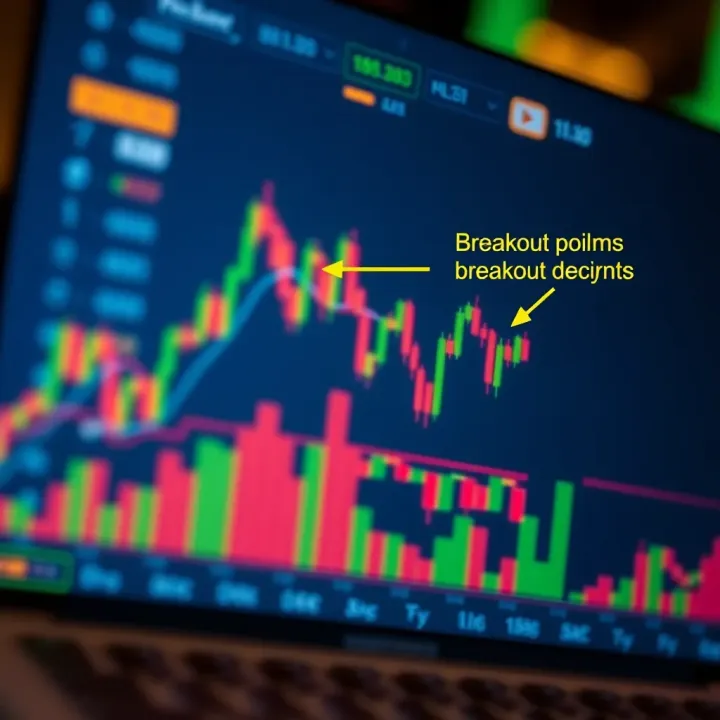
Recognising these patterns early can help you enter or exit trades at better levels. For example, spotting a "Head and Shoulders" formation could warn you of a possible market reversal. Similarly, a "Double Bottom" pattern might signal a strong support level, offering a buying opportunity.
Chart analysis for Bank Nifty is not just about spotting shapes. It's about understanding the psychology behind price moves and combining it with volume data and other indicators to improve accuracy.
Some common Bank Nifty chart patterns include:
Triangles (Ascending, Descending, Symmetrical): Indicate consolidation before a breakout.
Double Tops and Bottoms: Mark potential reversals after sustained trends.
Flags and Pennants: Short-term continuation patterns showing pauses in price movement.
Cup and Handle: Suggests a bullish continuation following a consolidation phase.
To deepen your analysis, using PDF resources that offer downloadable chart examples, step-by-step pattern recognition guides, and case studies can be invaluable. Such materials often show annotated charts and historic instances from Indian markets, making learning practical and relevant.
By incorporating chart pattern study with key technical indicators like Moving Averages, RSI (Relative Strength Index), and volume analysis, you get a more rounded perspective. This mix can reduce false signals and improve trade timing.
In summary, mastering Bank Nifty chart patterns equips you with a toolkit to read market signals better. Alongside good PDF guides, practice and real-time observation will help sharpen your trading skills over time.
Bank Nifty reflects the combined performance of the banking sector firms listed on the National Stock Exchange (NSE). It includes 12 major banks, such as HDFC Bank, ICICI Bank, State Bank of India, and Axis Bank, accounting for a significant portion of the financial market's activity. Tracking Bank Nifty helps investors gauge the stability and growth potential of India’s banking industry, which itself is a barometer for economic health.
For example, during the last financial year, Bank Nifty showed strong resilience despite broad market volatility, driven largely by recovery in loan growth and improved asset quality. So, understanding this index gives traders a focused view on banking sector trends rather than the wider market noise.
Chart patterns offer a visual representation of price movements over time, helping traders predict future market behaviour. By recognising patterns like flags, pennants, or head and shoulders on Bank Nifty charts, you can identify potential trend reversals, continuations, or breakouts.
For instance, spotting a double bottom pattern in the Bank Nifty chart after a decline might suggest a possible bullish reversal. Traders can use this insight to time their entry or exit points, thereby managing risk effectively. Ignoring such patterns may lead to missed opportunities or unexpected losses.
Chart patterns can provide early signals that straightforward indicators might miss, especially in a market as dynamic as Bank Nifty.
PDFs consolidate detailed information on Bank Nifty chart patterns in a structured, easy-to-access format. These resources often include annotated charts, step-by-step pattern recognition guides, and strategy tips that you can study offline at your own pace.
Government and reputed financial education platforms frequently offer downloadable PDFs, adding credibility to the content. Unlike videos or blogs, PDFs remain unchanged, ensuring you always have the original reference. Moreover, they are convenient for quick revision before market hours or when planning trades.
In practical terms, many traders keep a collection of such PDFs for repeated consultation, which enhances their pattern recognition skills and confidence. Mastering chart patterns via PDFs can directly translate into better decision-making and improved returns on Bank Nifty trades.
This section sets the foundation by explaining why Bank Nifty is a critical index to watch, how chart patterns assist in navigating its price movements, and why PDFs serve as valuable learning tools for traders. These insights prepare you for deeper discussions on specific chart patterns and strategies in subsequent sections.
Understanding common Bank Nifty chart patterns is essential for traders aiming to predict market moves and plan their trades effectively. These patterns reveal the psychology of market participants through price action, helping identify whether the existing trend will continue or reverse. This section breaks down key continuation and reversal patterns relevant to Bank Nifty, making it easier for traders to spot practical setups and manage risk better.
Flags are short-term consolidation patterns that usually appear as small rectangles slanting opposite to the prevailing trend. They indicate a minor pause before the market continues in the original direction. For example, after a sharp upward move in Bank Nifty, a flag forms when prices trade within a narrow range in a downward channel. Once the price breaks out above this channel, it often resumes its uptrend. Flags are useful for traders who want to catch the momentum trade within a trending market by placing entry points above or below the flag's boundary.

Pennants resemble small symmetrical triangles formed by converging trendlines. Like flags, pennants reflect a brief pause after a strong price movement before the trend continues. Suppose Bank Nifty surges on volume; you may see a pennant forming as price consolidates tightly. Breakout above this pennant signals the continuation of the initial move. These patterns generally complete within a few days, making them attractive for short-term traders looking for quick entries with limited stops.
Rectangles occur when price moves sideways between well-defined support and resistance levels, creating a box-like shape. This pattern signals indecision before the price breaks out in either direction. For Bank Nifty, rectangles often form after significant rallies or declines, offering traders a chance to enter on breakout with confirmation. For instance, a rectangle after a bullish run suggests buyers and sellers are balancing out; a breakout above signals renewed buying interest.
Head and Shoulders is a reliable reversal signal where the price forms three peaks—the middle one (head) being the highest and the other two (shoulders) lower and roughly equal. In Bank Nifty, spotting this pattern after an uptrend suggests the rally is exhausting, and prices might reverse downward. Traders watch for a breakdown below the neckline connecting the two shoulders as a confirmation to sell or short the index, often setting targets based on the pattern's height.
Double Top and Bottom are simpler reversal patterns showing two peaks (top) or troughs (bottom) at similar price levels. A double top after an uptrend indicates resistance holding firm, likely causing the price to drop. Conversely, a double bottom after a decline signals strong support, suggesting a potential bounce. For example, if Bank Nifty forms a double bottom around ₹35,000, breaking above the intervening peak encourages traders to buy with stop-loss just below support.
Cup and Handle patterns signal bullish reversals or continuation. It looks like a “cup” shaped rounding bottom, followed by a slight pullback forming the “handle.” In Bank Nifty charts, this pattern shows gradual consolidation and accumulation. When price breaks out from the handle's resistance, it often leads to a strong upward move. Traders use this pattern to identify well-timed entries, usually with stop-loss just below the handle’s low.
Recognising these common patterns on Bank Nifty charts can provide traders with clear visual cues for decision-making, improving trade timing and risk control.
By learning to read these patterns, backed by solid PDF resources with detailed charts and examples, you can build confidence in your technical analysis and better navigate Bank Nifty’s fluctuations.
PDFs serve as reliable, accessible tools for traders aiming to grasp Bank Nifty chart patterns effectively. Unlike scattered online articles or videos, well-organised PDF guides consolidate essential knowledge, making it easier to refer back when analysing price movements. These resources often include clear diagrams, practical examples, and step-by-step explanations that help traders, whether beginners or experienced, understand complex patterns without the noise of excessive jargon.
By downloading PDFs, you gain the advantage of learning offline and revisiting concepts multiple times, which aids retention. PDFs also allow easy annotation, so you can highlight key points or add your own notes based on market behaviour. For instance, a PDF on 'Double Top and Bottom' patterns might include precise entry and exit points relevant to Bank Nifty, helping you spot trading opportunities in real time.
PDF guides offer a consistent format, which simplifies studying and applying chart patterns. They present information in a compact, orderly manner, making it easier to compare different patterns side by side. Traders also benefit from the portability of PDFs, as these files can be stored on mobile devices, tablets, or laptops, assisting quick reference during active market hours.
Moreover, many PDFs are designed by professionals who back their explanations with historical data and charts, offering real-market context. This reduces guesswork and builds confidence. For example, a PDF from a reputed brokerage might illustrate how patterns played out across various Bank Nifty cycles, adding practical value for decision-making.
National stock exchanges like the National Stock Exchange of India (NSE) occasionally release educational PDFs that explain technical analysis, including chart patterns. These documents come directly from market regulators or the exchange, ensuring accuracy and relevance to Indian market conditions. Using such official materials can deepen your insight with authentic, regulation-aligned content, which is often free of cost.
Besides regulatory trustworthiness, exchange PDFs may incorporate data specific to Bank Nifty’s historical trends, making these resources particularly valuable when tailoring your trading strategy.
Several seasoned market analysts and brokerage houses publish detailed PDFs analysing Bank Nifty chart patterns. These analysts often share unique perspectives, combining technical skills with market experience. Their PDFs can include advanced tips and nuanced interpretations that go beyond basic pattern recognition.
For instance, you might find PDF reports discussing how certain patterns signal market sentiment shifts or how to adjust trades during volatile sessions. While these guides can add layers to your knowledge, it’s wise to cross-check them against multiple sources as opinions may vary.
Specialist financial education websites and online trading academies provide downloadable PDFs focused solely on chart patterns and technical analysis. These include structured courses broken into digestible modules, often supplemented with quizzes or practice charts.
Such PDFs cater well to students and freshers in trading, explaining concepts clearly and gradually. Additionally, many educational websites update their content regularly to reflect current market scenarios, which helps traders adapt to changing dynamics of Bank Nifty trading.
Using PDFs from varied but trustworthy sources broadens your understanding and equips you with practical tools to act swiftly in the market.
In summary, PDFs remain a practical way to study and analyse Bank Nifty chart patterns. They combine portability, clarity, and depth—qualities that enhance learning for traders who want factual and actionable guidance without distraction.
Using chart patterns effectively in Bank Nifty trading can help you spot market trends early and make smarter decisions. These patterns offer clues about when to enter or exit trades, manage risks, and confirm signals from other tools. Knowing how to apply them alongside other indicators sharpens your overall strategy.
Chart patterns often mark critical points where price action changes direction or gains momentum. For example, a Cup and Handle pattern can suggest a strong bullish move ahead. Once you see the handle forming, entering a trade just above the handle’s resistance level could catch the upward wave early. Conversely, spotting a Head and Shoulders pattern signals a likely trend reversal, prompting you to exit long positions before the decline picks up.
Using patterns this way reduces guesswork. Instead of reacting to random price changes, you enter or exit based on tested formations. For Bank Nifty, which can be volatile, honing in on these points helps avoid unnecessary losses or missed gains.
Chart patterns assist in defining your risk parameters neatly. For instance, after entering a trade on a breakout from a Flag pattern, you can set a stop-loss just below the flag’s lower boundary. This limits your loss if the pattern fails. Patterns like Double Top or Double Bottom also indicate strong support or resistance levels to place stop-loss orders effectively.
This approach safeguards your capital by clearly outlining where the trade idea no longer holds. Moreover, by sizing your positions based on pattern reliability and stop-loss distance, you maintain a balanced risk-reward ratio.
Remember, no pattern guarantees success, but using them with strict stop-loss rules keeps losses manageable.
Chart patterns work best when combined with complementary indicators such as the Relative Strength Index (RSI), Moving Averages (MA), or volume analysis. For example, a breakout from a Pennant pattern with rising RSI confirms buying strength, increasing the odds of a successful trade.
Volume, in particular, often validates pattern breakouts in Bank Nifty. A breakout without volume support may signal a false move. Likewise, using a 20-day Moving Average to confirm trend direction alongside chart patterns filters out misleading signals.
By integrating these elements, you can confirm entries, avoid false alarms, and time trades better.
In summary, applying chart patterns in Bank Nifty trading sharpens your timing and risk controls. When combined with stop-loss discipline and other technical tools, it helps you trade with more confidence and precision.
Understanding chart patterns is only half the battle in Bank Nifty trading; applying them correctly is what makes the difference. Practical tips help avoid errors, sharpen your skills, and keep you ready for changing market situations. Let's explore these essential guidelines.
Many traders stumble due to familiar pitfalls, such as misreading patterns or ignoring volume confirmation. For instance, mistaking a simple price pullback for a double bottom can lead to premature entries and losses. Always combine pattern recognition with volume analysis — a genuine reversal usually shows increased volume. Another frequent mistake is forcing patterns to fit wishful thinking rather than objective observation. Staying honest with the charts itself avoids costly errors.
Keep emotions in check, too. Overconfidence after a few wins may push risky trades ignoring patterns. Instead, treat every signal with the same scrutiny. Also, beware of using patterns without considering the overall trend; a head and shoulders pattern in a strong uptrend might fail frequently. Keeping these points in mind improves your pattern reading’s accuracy and consistency.
Like any skill, chart pattern analysis improves with regular practice. Dedicate time daily to review Bank Nifty charts, identifying and annotating patterns. Using PDF guides to revisit concepts helps reinforce learning. Maintain a trading journal capturing details like pattern type, entry and exit points, outcomes, and emotions experienced during trades.
This log builds a personalised database highlighting what works for you. Over time, you will spot which patterns yield better results in specific market conditions. For example, you might find pennants work well during mid-week volatility but not at month-end. Such insights help refine your strategy systematically rather than relying on guesswork.
Chart patterns don’t always behave the same across all market phases. Staying updated with macroeconomic news, RBI policy changes, and sector-specific developments affecting banks is critical. For example, a surge in crude prices may affect PSU banks differently from private ones, influencing the Bank Nifty’s price action.
Integrate news analysis with your chart work for a fuller picture. Updates on global markets also matter, as Bank Nifty often reacts to cues from the US Federal Reserve or geopolitical tensions. You can subscribe to credible sources like NSE India notifications or financial newspapers to stay informed.
Chart pattern analysis works best when combined with disciplined practice, honest observation, and awareness of the wider market landscape. This trio builds your confidence and decision-making precision in Bank Nifty trading.
By avoiding common errors, logging your observations consistently, and tracking market shifts, you improve your chances of decoding Bank Nifty's price movements effectively. Ultimately, practical discipline pays dividends more than theoretical knowledge alone.
Discover the most effective chart patterns in trading 📈! Learn practical tips and access useful PDF guides. Perfect for traders in India aiming to sharpen skills.

📈 Master Nifty chart patterns for smarter trading! Learn to spot trends, forecast price moves, and boost your strategy in India's market. 💹
📊 Learn to spot option chart patterns for better trading decisions with our practical guide. Access PDFs and tips to identify risks & opportunities in options.

📈 Learn the most powerful candlestick patterns used by traders to interpret market moves, make smarter decisions, plus access helpful PDF guides for practice.
Based on 6 reviews