
Top Candlestick Patterns Explained with PDF Guides
📈 Learn the most powerful candlestick patterns used by traders to interpret market moves, make smarter decisions, plus access helpful PDF guides for practice.
Edited By
Benjamin Hughes
Bullish candlestick patterns serve as vital tools in stock market analysis, helping traders and investors spot when prices may climb. These patterns reflect how market sentiment shifts from sellers to buyers and often signal a potential upward trend. Before diving into the specifics of popular patterns, it's important to understand the basics of a candlestick itself.
A candlestick shows four price points for a specific time – the open, high, low, and close. When the close is higher than the open, the candle typically appears bullish, indicating buying pressure. Recognising sequences or shapes formed by these candlesticks can offer clues about future price movements.
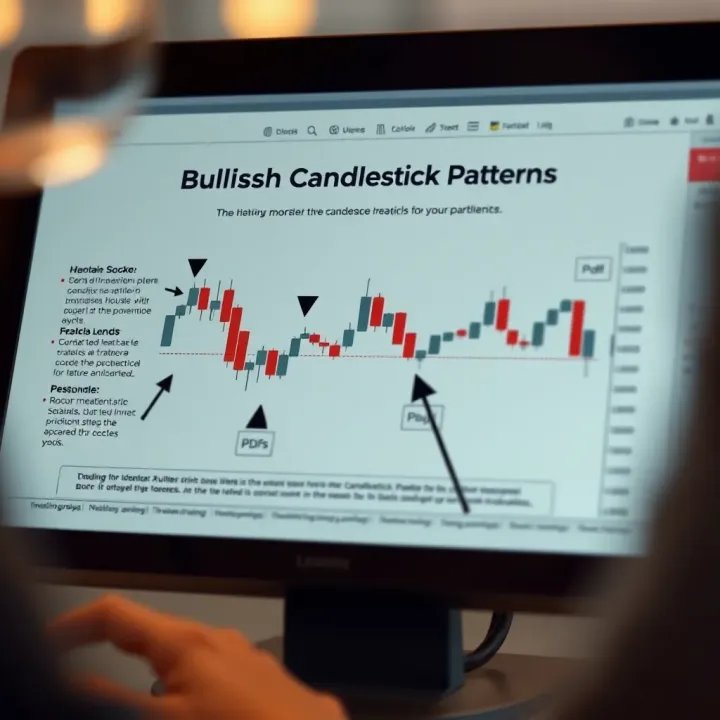
Spotting bullish candlestick patterns early can improve your timing for entering trades and increase your chances of profit.
Bullish patterns help identify moments when the market sentiment shifts positively, often after a dip or consolidation. Indian traders benefit from this knowledge as these signals can coincide with larger economic cycles or company-specific developments. For example, after quarterly results or budget announcements, bullish patterns may emerge, reflecting newfound optimism.
Confirm uptrends: Combine patterns with other indicators like volume or moving averages to validate signals.
Entry points: Patterns such as the Hammer or Morning Star often suggest good entry points with limited downside risk.
Risk management: Understanding these patterns allows setting stop-loss orders just below pattern lows, safeguarding capital.
Hammer: Looks like a small body with a long lower wick, appearing after a downtrend, indicating buyers pushing the price up.
Engulfing Pattern: A smaller red candle followed by a larger green candle fully covering it, signalling a strong shift to buyers.
Use these patterns alongside your own analysis and market knowledge. The guide will later provide PDFs in Hindi to help you practise identifying these formations confidently on live charts, making learning accessible and efficient.
Mastering bullish candlestick patterns equips you with clearer market insights, sharper decision-making, and better timing for profitable trades.
Bullish candlestick patterns play a significant role in understanding price movements in the stock market. They help traders and investors identify moments when buyers are gaining strength, often signalling a potential rise in prices. Grasping these patterns allows market participants to make well-timed decisions, reducing guesswork and improving the odds of profitable trades.
Bullish candlestick patterns are specific formations on price charts that indicate buying pressure and possible upward price trends. Each candlestick represents trading activity over a set time, showing opening, closing, high, and low prices. When one or more candlesticks form a particular shape, it reflects changing market sentiment. For example, if a stock forms a 'Hammer' pattern after a downtrend, it suggests buyers are stepping in and price reversal could be near.
In practical terms, these patterns make the price action visible and interpretable. Suppose you see a bullish engulfing pattern where a small red candlestick is followed by a larger green one — this signals strong buying that swallowed up previous selling pressure. Such clear visual cues help traders decide when to enter or exit positions.
Bullish candlestick patterns form a crucial part of technical analysis, complementing tools like moving averages and volume indicators. They provide an early warning system about shifts in market momentum. For instance, when combined with rising trading volume, a bullish pattern gains more credibility.
Understanding these patterns also helps investors avoid false signals. Spotting a bullish pattern without considering the broader trend or other indicators may lead to premature buy decisions. But when integrated thoughtfully, they offer a reliable edge.
"Bullish candlestick patterns reveal the tug of war between buyers and sellers, giving you a glimpse of who is winning after a period of hesitation."
Learning to read these patterns can especially benefit traders in volatile Indian markets where quick decisions often matter most. Over time, recognising these visual guides will allow you to trade with more confidence and less uncertainty, helping protect your capital and maximise gains.

This introduction sets the stage for exploring popular bullish patterns, practical trading strategies, and Hindi PDF resources to support your learning journey.
Bullish candlestick patterns play a vital role for traders and investors looking to identify potential buying opportunities in the market. Recognising these patterns helps anticipate a likely price uptrend, giving you an edge in your decision-making process. Each pattern has distinct features that convey the market sentiment—understanding these can improve both entry timing and risk management.
The Hammer and Hanging Man share a similar shape but occur in different contexts. A Hammer appears after a downtrend with a small body and a long lower wick, signalling that sellers pushed prices down but buyers regained control before the close. This suggests potential reversal from bearish to bullish. For example, in the Nifty 50 during a correction, spotting a Hammer near support levels often indicates fresh buying interest.
The Hanging Man looks like a Hammer but happens after an uptrend. It warns that buyers might be losing strength even though the session closed higher. Traders should wait for confirmation, such as a lower close on the next day, before acting.
A Bullish Engulfing pattern consists of a small red (bearish) candlestick followed by a larger green (bullish) candle that completely covers or “engulfs” the previous one’s body. This shift suggests strong buying momentum and a potential trend reversal to the upside. This pattern stands out during periods of consolidation where the market seems uncertain but demand overtakes supply decisively.
For instance, during volatile phases in the Sensex stocks, a Bullish Engulfing signals a renewed buyer interest, often triggering short-term rallies.
The Piercing Line pattern occurs over two sessions; the first is a long red candle, showing selling pressure, while the second opens below the first candle’s low but closes above its midpoint. This indicates buyers stepped in aggressively after an initial drop, suggesting a bullish turn.
The Morning Star is a three-candle formation considered more reliable. It starts with a long red candle, followed by a small-bodied candle (could be bullish or bearish), representing indecision. The third candle is a long green one closing well into the original red candle’s body, confirming the shift in sentiment.
These patterns help traders confirm a shift in market sentiment, reducing guesswork and improving trade confidence. Combining them with volume or support levels enhances reliability.
Mastering these common bullish candlestick patterns allows you to read charts like a pro and capture profitable moves early. Their distinct shapes and setups are practical tools, not just theory. Armed with pattern recognition skills, you can act swiftly and smartly in dynamic markets.
Bullish candlestick patterns give traders essential signals about potential upward price movements. Knowing how to use them effectively can improve your timing for buying and selling stocks, thus increasing your chances of profit. However, these patterns alone won’t guarantee success. You need to combine them smartly with other indicators and clear strategies to make informed trading decisions.
Relying solely on candlestick patterns can sometimes lead to false signals, so it’s wise to confirm these patterns with other technical tools. For example, if you spot a Hammer pattern suggesting a bounce back from a downtrend, check the Relative Strength Index (RSI) to see if the stock is oversold. If RSI also points to oversold conditions (below 30), it reinforces the likelihood of a price rise. Similarly, you can pair bullish engulfing patterns with moving averages—if the price breaks above a key moving average (like the 50-day MA) after the pattern forms, it signals stronger bullish momentum.
Besides RSI and moving averages, volume plays a big role. A pattern backed by increased trading volume signals real interest and commitment by buyers. For example, a Morning Star pattern appearing on higher volume is easier to trust than one on low volume, where the move might lack conviction.
Once you identify a reliable bullish candlestick pattern, deciding when to enter a trade is crucial. A common approach is to enter just above the high of the bullish candle to catch the upward momentum early. For instance, after spotting a Piercing Line pattern, place a buy order slightly above the high of the second candle. This way, you trade only if the bullish trend confirms itself.
Setting a stop-loss is vital to limit potential losses. Usually, you can place it just below the low of the pattern. If the price falls below this level, it signals the bullish setup has failed.
Exiting the trade demands equal attention. You can use resistance levels or trailing stops to lock in profits. Suppose you bought after a Hammer pattern during a consolidation phase; target the next resistance zone based on previous highs or a set percentage gain, whichever suits your risk appetite better.
Practical use of bullish patterns involves more than just spotting shapes; it’s about pairing these with other indicators like RSI, volume, or moving averages and practising disciplined entry-exit tactics to navigate the markets confidently.
By understanding how to combine these patterns with other tools and clear trading plans, you can improve your market reading skills and make better trading decisions.
For traders and investors keen on understanding bullish candlestick patterns, having access to quality PDF resources in Hindi can make a significant difference. These materials serve as handy references that simplify complex concepts and bring language convenience. Hindi PDFs often break down chart patterns into clear visuals and step-by-step explanations, which helps in faster learning without language barriers. This proves especially useful for individuals more comfortable with Hindi rather than English technical jargon.
Finding trustworthy PDFs on bullish candlestick patterns requires looking at reputable financial education platforms and official sources. Many brokerages in India, like Zerodha or ICICI Direct, offer educational PDFs for free download on their websites. These often come vetted by market experts and align with current trading practices. Also, SEBI’s investor education portal occasionally publishes resources in Hindi that cover stock market basics including candlestick reading.
Besides these, well-established financial training institutes such as National Institute of Securities Markets (NISM) and online learning platforms like the National Stock Exchange (NSE) website provide downloadable materials and study guides. Be cautious with random PDFs from unknown websites; unreliable information can lead to misunderstandings during live trading. Look for PDFs authored by certified traders or analysts with clear credentials and updated data.
Once you have a reliable PDF, use it as an interactive tool rather than just reading passively. Start by bookmarking key sections related to popular bullish patterns such as the hammer, engulfing, and piercing lines. Try applying examples from the PDF directly onto live charts using platforms like Upstox or Kite. Annotate the PDF if possible, making notes of patterns you notice during your trading sessions.
It helps to combine the PDF learning with video tutorials or community discussions available in Hindi. Checking your pattern recognition with fellow traders increases retention and practical understanding. Also, revisit the PDF regularly especially before starting trades; this refreshes your memory about entry and exit signals.
Remember, PDFs are most effective when used frequently alongside real market practice. The goal is not just to read but to train your eyes and judgement to spot bullish candlestick signals swiftly.
In essence, reliable Hindi PDFs bridge the gap between theory and practise. They enable you to build confidence in chart analysis and boost your chances of making informed decisions in the volatile Indian stock markets.
Understanding bullish candlestick patterns can give you an edge in trading, but beginners often face hurdles while learning these patterns. Getting familiar with common pitfalls and honing your pattern recognition skills through practice can save you from costly mistakes and improve your market calls. This section offers practical tips tailored for those new to candlestick analysis.
Many beginners jump into trading just after spotting a bullish pattern, expecting immediate price rises. But relying solely on one candlestick formation without considering the market context often leads to wrong decisions. For example, buying after seeing a hammer candlestick during a strong downtrend might backfire if the broader trend hasn’t reversed. Also, confusing similar patterns like a hammer and a hanging man—both look alike but have opposite implications—can cause losses.
Another error is ignoring volume confirmation when trading based on candlesticks. A bullish engulfing pattern on low volume may not indicate strong buying strength. It's wise to combine candlestick reading with volume analysis or trend indicators to confirm signals. Lastly, impatient traders often enter or exit positions too early. Remember, patterns work best when followed up by price confirmation in the next candles.
Consistent practice is key to recognising and trusting bullish candlestick patterns. Start by reviewing historical charts of widely traded Sensex or Nifty stocks on platforms like Moneycontrol or NSE India. Try spotting known patterns such as morning star or piercing line manually and note what happened next. Over time, you’ll build a mental library of real examples instead of just textbook pictures.
Using charting software with replay features helps simulate market conditions. For instance, you can watch price action candle by candle and pause when a bullish pattern appears to assess your guess about the trend. Joining Indian trading communities or forums also provides handy case studies and peer feedback.
Lastly, maintain a trading diary. Record every instance you spot a pattern, whether you traded on it or not, and later check the outcome. This will sharpen your judgement and help you develop a personalised approach suited to markets you prefer.
Practising patience, avoiding over-reliance on single indicators, and studying real charts will build your confidence in using bullish candlestick patterns effectively.
Getting these basics right sets the foundation before you incorporate advanced strategies or use PDF resources in Hindi for deeper learning.
📈 Learn the most powerful candlestick patterns used by traders to interpret market moves, make smarter decisions, plus access helpful PDF guides for practice.

📈 Learn how momentum candlestick patterns signal strong price moves in trading. Understand key types, interpretation tips, and find reliable PDFs for deeper insights.

📈 Discover key candlestick patterns in stock & commodity trading! From basics to advanced, learn to spot trends & make smarter market decisions today.

📈 Learn essential candlestick patterns to decode market moves! Master basics, advanced tips, and sentiment reading for stocks & forex trading success.
Based on 12 reviews