

Understanding Optimal Binary Search Trees with an Example
Explore Optimal Binary Search Trees 🌳 with a clear, practical example. Learn cost optimization and step-by-step construction for smarter data structures.
Edited By
William Foster
Binary trees form a fundamental part of computer science, especially for those involved in trading algorithms, data analysis, and software development. At its simplest, a binary tree is a data structure where each node holds a value and can have up to two children, called left and right. This arrangement enables quick search, insertion, and deletion operations, which proves highly useful in real-world applications such as organising hierarchical data, managing sorted datasets, and implementing decision processes.
Understanding binary trees helps clarify how many searching and sorting algorithms work under the hood. For instance, binary search trees (BSTs) are a type of binary tree where nodes on the left are smaller and nodes on the right are larger relative to a parent node. This property makes queries run efficiently, reducing average search times drastically compared to linear structures.

Different types of binary trees serve different purposes. Full binary trees have every node with either zero or two children, making them balanced for predictable performance. Complete binary trees keep all levels fully filled except possibly the last, prioritising space efficiency. Meanwhile, balanced binary trees like AVL or Red-Black trees maintain height balance to ensure operations run in logarithmic time even with frequent insertions or deletions.
In practical terms, binary trees power many daily technologies — from how e-commerce sites like Flipkart organise product categories to how trading systems filter and prioritise data in real time.
This article will walk you through the essential concepts of binary trees and focus on a hands-on example demonstrating their construction, traversal methods, and typical applications. The goal is to help you not only learn the theory but also see how these structures come alive in programming, especially within the Indian tech ecosystem where efficient data handling can mean the difference between profit and loss.
In the sections ahead, you will find clear definitions, code snippets, and application scenarios highlighting binary trees' impact on performance and decision-making.
By the end, this guide aims to make binary trees less of an abstract jargon and more a practical tool in your tech toolkit.
Binary trees are fundamental structures in computer science, offering a way to organise data that is both efficient and intuitive. For traders and analysts dealing with hierarchical data or fast searching needs, understanding binary trees is key. This section outlines their structure and role, setting up the foundation for practical implementation and real-world applications.
Nodes and relationships: A binary tree consists of nodes where each node stores data and links to at most two other nodes named children. These connections establish relationships that determine the tree's shape and use. Imagine a family tree where every person has up to two children – this reflects the binary tree's layout. A node without children is a dead end, while nodes with children act as branches splitting the data paths.
Parent, child, and leaf nodes: The terms denote positions and roles within the tree. A parent node connects to one or two children, passing down structure, while child nodes stem from a parent. Leaf nodes stand at the ends – they have no children. Practically, leaf nodes represent final data points, like specific products in a stock category or final calculations in a computation. Understanding these roles helps in navigating and manipulating the tree efficiently.
Use in organising hierarchical data: Binary trees offer a neat way to arrange data that follows a hierarchy, such as organisational charts or file directories. For example, a stock portfolio manager might store stocks categorised by sectors and sub-sectors using a binary tree to streamline searching and updating. The binary model reduces complexity compared to a flat list, making operations like insertion, deletion, and search faster.
Comparison with other tree structures: Unlike general trees where nodes can have many children, binary trees restrict this to two, simplifying algorithms and improving performance in many cases. While other trees like B-trees serve better in database indexing for large datasets, binary trees shine in applications requiring quick, recursive traversal and balanced operations. This balance between flexibility and simplicity makes binary trees a versatile tool in data structure design.
Understanding the basics of nodes, their roles, and the structure of binary trees equips you to use this data structure effectively for various computing tasks, including fast searching, sorting, and organising hierarchical information.
With this groundwork, you are better prepared to explore the types, traversal methods, and applications of binary trees covered in the forthcoming sections.
Understanding the types and characteristics of binary trees is key for those working with data structures, as it directly impacts how efficiently data can be managed and accessed. Binary trees vary in shape and constraints, influencing their traversal and utility in programming problems.
A full binary tree is one where every node has either zero or two children—no node has only one child. This structure is significant because it ensures maximal utilisation of each node’s capacity, making the tree dense and predictable. For example, a decision tree for a game might be full, as every state either ends (leaf) or leads to exactly two possible next moves.
On the other hand, a complete binary tree fills all levels fully except possibly the last one, which is filled from left to right. This property makes it especially useful in implementing heaps and priority queues, where the tree remains balanced and compact. For instance, when managing a job scheduling queue, completeness ensures minimal height and efficient access.
A binary tree is considered balanced if the heights of the left and right subtrees of every node differ by at most one. Maintaining this balance is crucial for keeping operations like search, insert, and delete close to optimal time complexity. AVL trees and Red-Black trees are classic examples where balancing is enforced strictly to boost performance.
Balancing directly affects efficiency. An unbalanced tree can degrade into a structure resembling a linked list, where search operations lose their logarithmic speed. In contrast, a balanced tree offers search operations in about O(log n) time, crucial for large datasets commonly found in financial data analysis or real-time stock exchange platforms.

Binary Search Trees (BSTs) enforce an ordering property where each node’s left child contains smaller values and the right child contains larger values. This ordered layout facilitates quick look-ups and dynamic data ordering, which is indispensable in many algorithms.
BSTs are widely used in searching and sorting implementations. For example, a BST can maintain a sorted list of stock prices, allowing rapid retrieval or insertion of new prices as market values fluctuate. This structure reduces the complexity of these operations, making data handling faster and more efficient compared to unsorted lists.
Efficient data structures like balanced and binary search trees form the backbone of responsive software systems handling vast amounts of information daily.
By grasping these types and characteristics, you can better design or choose binary tree structures suited for different programming challenges, especially those involving fast data retrieval and manipulation.
Understanding binary trees becomes clearer when we see one in practice. This section focuses on creating a simple binary tree, explaining how the choice of node values and their arrangement impacts its functionality. A hands-on example helps traders, investors, and educators alike grasp how binary trees organise data efficiently and why the structure itself matters.
Selecting node values is the first critical step in building a binary tree. For practical purposes, these values can represent anything hierarchical or sorted – say, stock prices on different dates or product IDs in inventory management. Choosing realistic data makes the structure more relatable and easier to understand. For instance, you might pick node values like 50, 30, 70, 20, 40, 60, and 80 to reflect a sample set of numerical data.
The values chosen often determine the tree’s use. If the aim is to search or sort efficiently, node values must be distinct and follow certain rules, like in Binary Search Trees (BST). This ensures the tree maintains order and can be navigated quickly, which is essential for applications like real-time stock analysis.
Assigning left and right children to each node shapes the tree's structure and dictates how it will be traversed later. In a BST, left children hold values smaller than their parent, while right children carry larger values. This organisation simplifies searching by eliminating half the tree at each step, similar to how investors quickly narrow down stock options.
When setting these children, it's important to maintain balance as much as possible. An unbalanced tree, with nodes skewed heavily towards one side, can degrade performance. For example, if every node only has a right child, the tree looks like a linked list, losing the benefits of quick data access.
A visual illustration of the binary tree helps clarify its layout and relationships. Typically, diagrams display the root node at the top, branching out to left and right children below. Such visuals allow you to spot the depth and breadth of the tree immediately, which can be tricky in code alone.
For example, showing a tree with root 50, left child 30, and right child 70 instantly conveys the hierarchy. This clarity assists analysts in mapping complex data sets intuitively, which can be useful when explaining data structures in reports or presentations.
The position of nodes in the diagram matters greatly. Nodes placed at higher levels represent parents, while deeper nodes are their children or leaves. This arrangement visually encodes the order and priority of elements—key when trees represent decision processes or hierarchical records.
Notably, consistent spacing and alignment in the diagram prevent confusion. A haphazard layout might hide relationships or suggest incorrect ordering. Practically, good node arrangement supports better comprehension and quicker debugging when implementing binary trees in software.
Visualising how values fit into a tree not only aids understanding but also reveals the strengths and weaknesses of your data structure design early on.
In summary, constructing a binary tree with well-chosen values and clear child assignments allows you to work with the tree efficiently. When combined with a proper visual representation, it becomes easier to master binary trees’ behaviour and apply them confidently in real-world scenarios like financial data sorting or decision-making systems.
Traversing a binary tree refers to the systematic process of visiting each node exactly once. It becomes essential when you want to retrieve, modify, or display the data stored within the tree structure. For instance, in financial data analysis, traversing can help extract sorted stock prices or evaluate expressions represented by the tree. Choosing the right traversal method depends on the specific task, as each approach offers a unique way to process the nodes.
Preorder traversal visits nodes in this order: root first, then left subtree, and finally right subtree. This method is useful for copying the tree or expressing its structure in prefix notation. It starts from the top, ensuring that the parent node is handled before any of its children.
Consider a binary tree representing a decision-making process. Starting at the root node, preorder visits that root, followed by the entire left side and then the right side. Suppose the tree stores investment decisions; preorder traversal allows you to outline decisions before handling sub-decisions, providing a clear roadmap.
Inorder traversal follows the left subtree, root, and then right subtree sequence. This traversal is often applied to binary search trees (BSTs) because it visits nodes in ascending order according to their values. The method is key to retrieving data in a sorted manner without extra sorting steps.
In financial databases storing stock prices as nodes, an inorder traversal can directly generate a sorted list of prices. For investors or analysts seeking quick access to ordered market data, this traversal simplifies queries and reduces computational overhead, making data retrieval efficient and reliable.
Postorder traversal visits the left subtree first, then the right subtree, and finally the root node. This approach ensures that child nodes are processed before their parent, which is practical when the parent depends on the outcome of its children.
When deleting a binary tree, postorder traversal guarantees that all children are deleted before the parent node, avoiding dangling references. Similarly, in expression evaluation, where nodes represent operators and leaves hold values, postorder traverses operands first, then operators, supporting accurate calculation of expressions.
Traversing methods offer tailored approaches to interact with binary trees, enabling efficient data processing in searching, sorting, decision-making, and more. Choosing the right traversal is key to harnessing the true potential of binary trees.
Binary trees are not just theoretical structures; they power several practical areas in computer science and software development. Understanding their applications helps traders, investors, analysts, and educators appreciate their role beyond textbooks. Let’s explore key areas where binary trees make a tangible impact.
Role of binary search trees: Binary Search Trees (BSTs) organise data with a specific ordering: values smaller than a node are placed in its left subtree, and larger values in the right subtree. This property makes searching for a key efficient. For example, if you want to quickly find a stock symbol in a large dataset, BSTs can reduce the number of comparisons by roughly half at each step.
Efficiency in operations: BSTs typically provide search, insertion, and deletion in O(log n) time when balanced. This efficiency matters in financial applications where quick lookups and updates are frequent—say, processing live order books or maintaining sorted transaction histories. However, if the tree becomes skewed (like a linked list), performance could degrade to O(n), so self-balancing trees like AVL or Red-Black trees are often preferred in real systems.
Heap implementation as binary tree: Heaps are a specialised binary tree used primarily to implement priority queues. In a max-heap, the parent node is always larger than its children, ensuring the highest priority element stays at the root. This structure helps with tasks where you repeatedly need the 'maximum' or 'minimum' element without scanning the entire dataset, such as extracting the highest bidding price in an auction.
Use in scheduling and resource allocation: Operating systems and job schedulers use heaps for managing tasks by priority, ensuring that high-priority processes get CPU time first. Similarly, in cloud resource allocation, heaps can quickly identify the most urgent requests, balancing resources without delays. This method saves valuable time, especially when managing lakhs of tasks or processes.
Binary trees in mathematical expressions: Expression trees use binary trees to represent arithmetic expressions where internal nodes are operators and leaves are operands. This design simplifies evaluating complex calculations, like those found in financial modelling or algorithmic trading formulae, where operations must follow precise order.
Syntax trees in compilers: Beyond maths, compilers use abstract syntax trees (ASTs), a special binary tree, to break down code structure for languages like C++ or Java. Understanding how syntax trees work helps analysts appreciate how high-level trading algorithms translate into machine-level instructions, impacting execution speed and correctness.
Binary trees quietly power many systems you encounter daily, from search optimisations to expression evaluation, proving their practical indispensability across diverse fields.
In summary, grasping how binary trees function in real-world contexts reveals their crucial role in improving efficiency and managing complexity in both computing and finance domains.
Explore Optimal Binary Search Trees 🌳 with a clear, practical example. Learn cost optimization and step-by-step construction for smarter data structures.

📚 Dive into optimal binary search trees: basics, optimization methods, algorithms, and comparisons in data structures for students & pros alike.
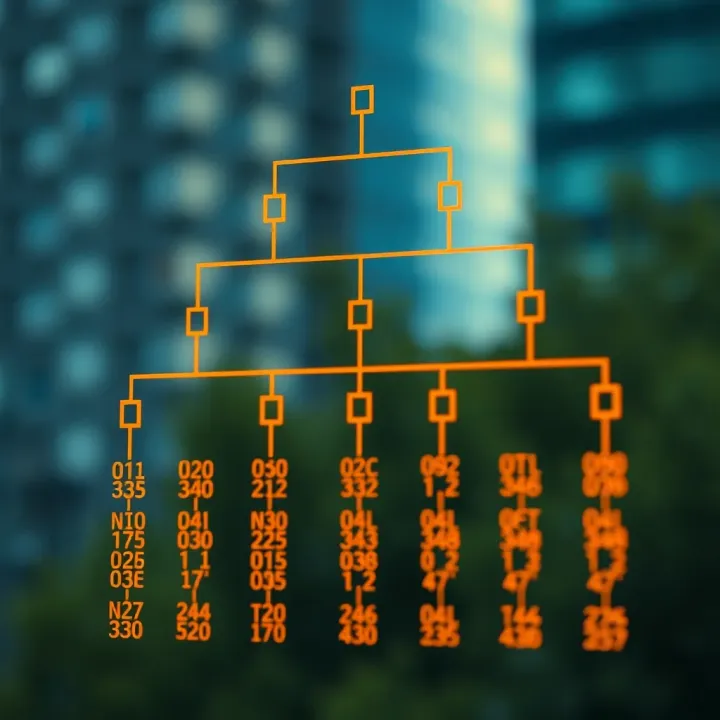
Learn how Optimal Binary Search Trees 🧠 improve search efficiency with clear insight into their definition, costs, construction, and real-world uses in computing.
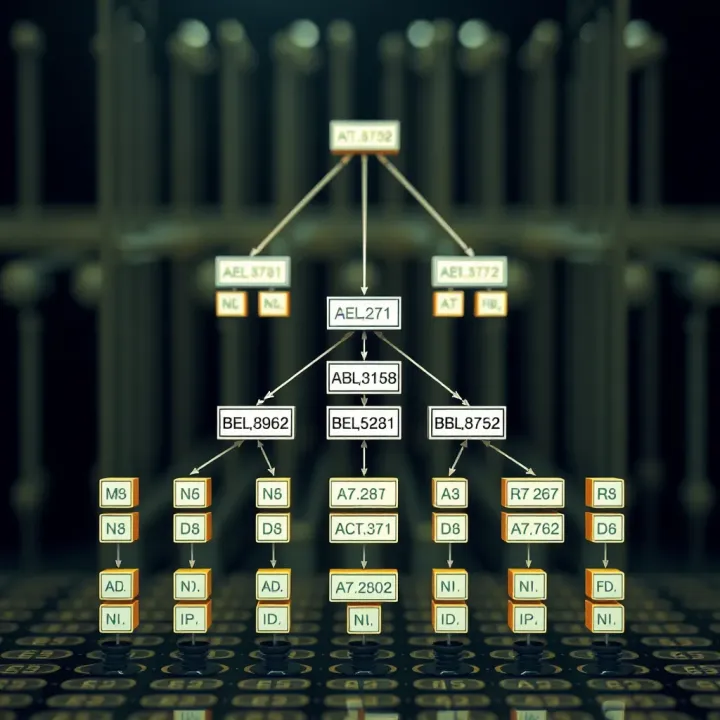
Explore how to find the maximum depth of a binary tree 🌳 with clear explanations, algorithms, examples, and tips. Perfect for coders & data structure fans!
Based on 15 reviews