
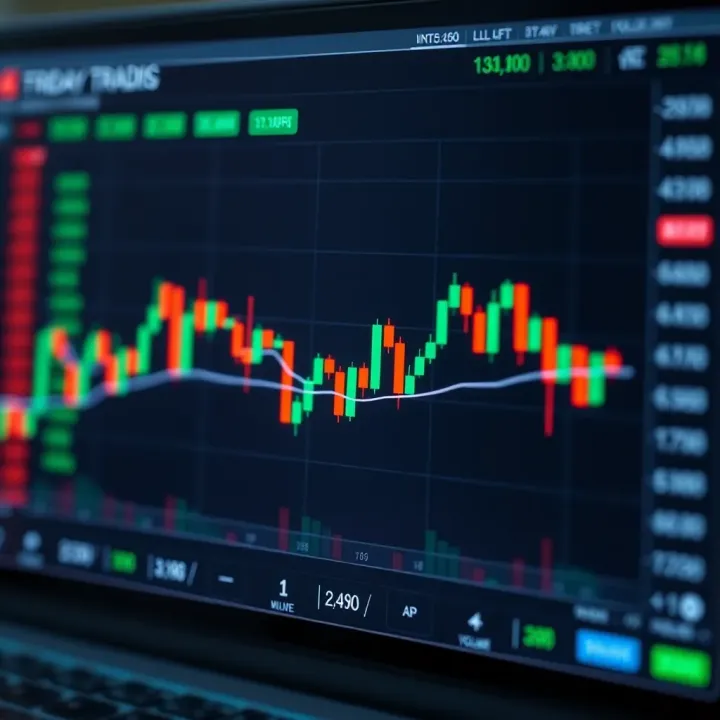
Guide to Intraday Trading in India
📈 Master intraday trading in India with practical tips, strategies, key tools, and risk management to trade confidently within the same day.
Edited By
Michael Davies
Intraday trading in India demands sharp reflexes and a clear grasp of how the market behaves throughout the day. Choosing the right shares to trade can make or break your day’s profits. Unlike long-term investments, intraday trading involves buying and selling within the same trading session, so the focus is on quick price movements rather than company fundamentals.

Selecting shares with good liquidity and volatility is key. Liquidity ensures you can enter or exit positions without significant price impact, while volatility offers opportunities to profit from price swings. For example, shares of companies like Reliance Industries, Infosys, or Tata Motors often provide the volume and price movement traders look for during the day.
Liquidity: Choose shares that trade in high volumes. Illiquid stocks can cause slippage and delay order execution.
Volatility: Look for stocks with enough price movement but avoid extreme fluctuations that can increase risk.
Price Range: Mid-cap and large-cap stocks usually offer stable yet sufficient volatility, making them ideal candidates.
News Impact: Stocks with upcoming corporate announcements, earnings reports, or sector news can experience sharp moves.
Market Sentiment: Track broader indices like Nifty or Sensex; their trend often influences individual stock movement.
Focusing on shares where buyers and sellers actively participate helps secure quick, efficient trades.
Suppose Tata Steel announces a major contract in the morning. This news can trigger price swings during the day. A well-informed trader would monitor Tata Steel’s volume and price moves closely to capitalise on short-term gains.
By targeting shares combining steady liquidity and promising volatility, intraday traders can improve the chances of profitable trades while managing risks effectively. The next sections will cover specific strategies and tools to further enhance your trading decisions.
Selecting the right shares for intraday trading hinges on certain key features that can greatly impact your trading success. These features help you find shares that move actively within the trading day, allowing you to capitalise on price fluctuations. Understanding these elements saves time and reduces risks, especially because intraday trading demands quick decisions.
Liquidity ensures that you can buy or sell shares quickly without causing a big impact on the price. For an intraday trader, liquidity is crucial because entering and exiting trades fast is the core of the strategy. Take Reliance Industries or Tata Consultancy Services (TCS) as examples—they consistently see large volumes daily, making it easy to trade in any quantity without waiting.
On NSE and BSE, you can track daily trading volume easily through market-watch lists on trading platforms like Zerodha’s Kite or Upstox. Look for stocks with volumes in lakhs or crores frequently, especially those among the top traded shares. These stocks not only have high liquidity but also tighter bid-ask spreads, which reduces trading costs.
Price volatility shows how much a stock's price swings within a day. Indian markets feature stocks that have predictable rhythms, especially during earnings announcements or sector-specific news. Stocks like HDFC Bank or Infosys often exhibit well-defined volatility, which traders can use to plan entry and exit.
The best intraday shares usually have dependable price movements daily. For instance, shares from the banking or IT sector often display consistent swings due to ongoing economic updates or policy changes. Choosing such shares helps traders avoid unexpected quiet days where profit opportunities might be limited.
Large-cap stocks like State Bank of India (SBI) and Larsen & Toubro offer stability and steady volume, making them less risky for intraday trades. Conversely, mid-cap stocks might deliver bigger price swings but also carry higher risk. Traders often balance the two based on their risk appetite and capital size.

Sector-specific happenings influence intraday trading heavily. For example, during festival seasons, retail stocks often rise, while banking shares react sharply to RBI’s rate changes. Keeping an eye on sector trends, like pharmaceutical stocks during health policy updates, can give traders an edge in picking active shares for the day.
Finding shares that combine good liquidity, steady volatility, and sector relevance can significantly boost your intraday trading outcomes.
Choosing shares without these key features might lead to missed opportunities or unnecessary risks, so make these criteria your checklist before diving into trades.
Intraday traders often focus on shares that show strong, reliable price movements within the trading day. Popular shares tend to have good liquidity and volatility, making it easier to enter and exit positions quickly without large price slippage. In India, traders frequently look at blue-chip stocks, mid-cap and small-cap options with momentum, and sector-specific shares that respond well to news and market trends.
Examples of Blue-chip Shares with High Intraday Activity
Blue-chip stocks like Reliance Industries, HDFC Bank, and Infosys regularly feature high intraday trading volumes. These shares are part of the Sensex and Nifty 50 indices and attract attention due to their stability and big market caps. On typical trading days, these stocks witness sharp price swings sparked by broader market movements, sector news, or quarterly results, giving intraday traders ample opportunities to profit.
Benefits and Risks of Trading Blue-chip Stocks
Trading blue-chip shares offers the benefit of better liquidity and tighter bid-ask spreads, which helps traders enter and exit positions swiftly. The transparency and robust regulatory framework surrounding these companies reduce the risk of sudden, unexplained price jumps. However, blue-chip stocks can also have lower volatility compared to mid or small caps, so intraday traders might find fewer opportunities for big gains. Besides, impact from global markets and economic conditions can lead to unexpected price moves, so risk management remains crucial.
Identifying Promising Mid-cap Stocks for Quick Trades
Mid-cap shares like Tata Consumer Products or Voltas can offer strong momentum and daily price fluctuations ideal for intraday trades. Traders usually watch for recent news, earnings surprises, or sectoral developments that cause increased buying interest. These picks might not be as liquid as blue-chips, but the higher volatility can lead to bigger intraday price swings – attractive for skilled traders ready to take on more risk.
Challenges in Intraday Trading of Smaller Stocks
While small-cap stocks may present opportunities for quick gains, they come with challenges. Lower liquidity in stocks such as Granules India or Aarti Industries can result in wider spreads and slippage. This makes it tougher to execute trades at expected prices, impacting profitability. Additionally, these shares may react unpredictably to rumours or speculative activity, increasing volatility but also the risk of losses. Traders need sharp discipline and solid stop-loss strategies here.
Technology, Banking, and Pharma: Sectoral Impact on Intraday Moves
Certain sectors influence intraday trends more visibly than others. Technology stocks like Wipro or Tech Mahindra react quickly to global IT demand news or domestic policy shifts. Banking shares such as Axis Bank and ICICI Bank show daily movement tied to RBI announcements or loan growth data. Pharma companies like Dr Reddy’s Laboratories can spike on drug approvals or regulatory updates. Understanding sector behaviours helps traders anticipate momentum shifts within a session.
Tracking News and Events to Exploit Sector Trends
News often drives intraday price action. For instance, government policy changes, RBI rate decisions, or international trade developments can rapidly impact sector-specific shares. Traders use real-time news feeds and alerts to catch these moves early. For example, news of vaccine approval quickly lifted shares of Bharat Biotech last year, creating short-lived trading opportunities. Staying updated on sector events and economic indicators allows intraday traders to ride timely trends and adjust positions accordingly.
Popular shares for intraday trading in India often combine liquidity, volatility, and sectoral relevance. Successful traders match their strategies to these factors while managing risk carefully.
The shares you pick will depend on your risk appetite, experience, and the market environment on any given day. Blue-chips offer stability, mid-caps bring momentum, and sector plays require quick reflexes to news—balancing these elements can build a strong intraday trading approach.
Successful intraday trading hangs largely on how well you pick and keep track of stocks throughout the day. Using the right techniques and tools can make a significant difference in spotting profitable opportunities and reducing risks. In India’s dynamic stock market, these methods help traders stay alert to price swings and execute timely decisions.
Technical analysis forms the backbone for many intraday traders. Indicators such as Moving Averages, Relative Strength Index (RSI), and Moving Average Convergence Divergence (MACD) provide critical clues about a share’s momentum and potential turns in price. For instance, the 50-day Moving Average can indicate support or resistance levels, helping traders gauge quick entry or exit points during the day.
RSI helps identify overbought or oversold conditions, signalling when a stock might reverse direction. If a share’s RSI crosses above 70, it might be due for a pullback, while a reading below 30 often points to a rebound. MACD, by contrast, observes the relationship between two moving averages to suggest trend changes. In the case of shares like Reliance Industries or HDFC Bank, these indicators often align well with price action, aiding traders in India to time their trades effectively.
Chart patterns also play an important role in intraday trading. Patterns like flags, pennants, and triangles reflect periods of consolidation followed by breakouts—prime moments for day traders. For example, a bullish flag pattern in TCS shares after a sharp upward move often hints at a continuation, providing traders a chance to jump in before prices surge further.
Additionally, recognising double tops or bottoms can help prevent losses by signalling reversals early. These patterns work best when combined with volume analysis, which confirms the strength of the move. Overall, understanding chart formations helps you read the market’s mood and spot setups with high chances of success.
Real-time data feeds are non-negotiable in intraday trading. Platforms like Zerodha Kite, Upstox Pro, and Angel Broking provide live NSE and BSE market updates with minimal lag. Their user-friendly interfaces allow quick access to price charts, order books, and news—all crucial for swift decisions.
Most platforms also offer mobile apps, enabling tracking even when on the move. For example, the Kite app’s market watch feature and widget controls allow traders to manage their portfolios smoothly during volatile sessions.
Market scanners and alerts further sharpen a trader’s focus. Scanners filter stocks based on criteria such as high volume spikes, noteworthy price movements, or technical indicator signals. If a scanner spots sudden volume jump in Adani Ports, traders can investigate immediately.
Customisable alerts ensure you don’t miss critical moments, sending notifications for price levels, trend shifts, or news releases. Effectively using these tools avoids the need for constant screen-watching and helps maintain focus on the most promising trades.
Regularly combining technical analysis with reliable real-time tools empowers intraday traders in India to react fast and trade confidently.
Risk management is key to surviving and thriving in intraday trading. Since trades happen within a single day, sudden market swings can hit your portfolio hard if you are not careful. Managing risk helps protect your capital from such rapid losses and keeps you in the game longer. Best practices include setting clear stop-loss and target prices, avoiding emotional decisions, and following a disciplined trading plan consistent with your risk appetite.
How to Calculate Effective Stop-loss Levels
Stop-loss is your safety net—it limits the loss if the market moves against you. To set an effective stop-loss, first understand the stock’s typical price volatility. For instance, if a share generally moves ₹2–₹3 in a day, placing a stop-loss just ₹0.50 away might trigger unwanted exits due to normal fluctuations. A practical method is to use Average True Range (ATR), which captures average price movement. If ATR is ₹3, setting a stop-loss at 1 to 1.5 times ATR (₹3 to ₹4.5) below your entry point balances protection and breathing room.
Balancing Risk and Reward in Daily Trades
Intraday trading works best when your potential reward is at least twice the risk you take, known as a risk-reward ratio of 1:2 or higher. For example, if you risk ₹100 per share by setting your stop-loss at ₹100 below the purchase price, aim for a target price ₹200 or more above entry. This way, even if only half your trades succeed, you can still be profitable overall. Without this balance, you might hit small profits but suffer a big loss that wipes out gains quickly.
Overtrading and Emotional Decision-making
It’s tempting to jump into multiple trades during the day, but overtrading often leads to losses caused by impatience or chasing the market. Emotional decisions, such as holding onto losses hoping for a rebound or selling winners too early out of fear, undermine profitability. For instance, a trader doubling down on a losing position can magnify losses. To counter this, set strict limits on the number of trades and always stick to your exit plans.
Importance of Discipline and Trading Plans
A trading plan provides structure and prevents impulsive actions. It outlines your entry, exit, stop-loss, and profit-taking strategies tailored to market conditions and personal risk tolerance. Disciplined execution of the plan is essential—deviations often bring mistakes. For example, during volatile markets, traders who stick to predetermined stop-loss levels avoid emotional panic. Discipline also means accepting small losses gracefully and not trying to recover all losses in a single trade.
Successful intraday trading boils down to controlling risks and maintaining discipline. By setting realistic stop-losses, balancing reward with risk, avoiding overtrading, and following a solid plan, you protect capital and improve chances of consistent profits.
This approach works well alongside the right share selection and technical analysis discussed earlier in the article.
Before you put real money on the line in intraday trading, it's wise to get your basics right. This section covers key steps like selecting the right broker, practising with simulated trades, and accessing educational materials to build a strong foundation. Each of these plays an important role in shaping your trading approach and managing risks effectively.
India offers diverse brokerage models, primarily flat-fee and percentage-based charges. Flat-fee brokers like Zerodha and Upstox charge a fixed amount per trade regardless of size, making them popular among intraday traders who execute multiple trades daily. Percentage-based models, more common in traditional full-service brokers, charge a fraction of the trade value. Comparing these models is crucial — for instance, a trader spending ₹10 lakh daily will pay very differently under each system.
Brokerage fees directly impact intraday profitability since margins can be tight. If you pay ₹20 per trade on a single ₹1 lakh stock, that cost can eat into your gains—especially if the price moves are small. Thus, choosing a broker with low or zero brokerage on intraday can preserve profits. Also, watch out for additional costs like GST, Securities Transaction Tax (STT), and stamp duty, which add up. Some brokers offer zero brokerage on equity delivery but charge for intraday trades; knowing these details helps tailor your strategy.
Starting out, practising with virtual money avoids real losses and sharpens your skills. Paper trading platforms replicate live market conditions, letting you test choices without risking capital. This method helps understand timing, order placements, and response to market swings. Many freshers tend to jump into trading without practice, only to lose money quickly. Paper trading offers a control environment to learn patience and discipline.
In India, platforms like Kite by Zerodha provide free simulated trading accounts. Others include Upstox Pro and TradingView’s paper trading feature. These simulators mirror NSE and BSE price feeds for authenticity. Using these tools daily for a few weeks can boost your confidence and reveal gaps in your strategy.
Books like "How to Make Money Trading" by Ashwani Gujral or "Technical Analysis of the Financial Markets" by John Murphy offer insights into patterns and indicators suited for intraday trading. Online tutorials from NSE India, YouTube channels by experienced traders, and paid courses focusing on Indian markets provide practical techniques tailored to our unique market behaviour.
Websites such as Moneycontrol and Economic Times Market, along with forums like Traderji and ValuePickr, serve as excellent spots to stay updated and discuss strategies. Engaging with communities lets you learn from others' experiences, understand emerging trends, and avoid common pitfalls. Having these resources handy ensures you keep learning even after you start trading with real money.
Starting well-prepared with the right broker, practice, and education makes a big difference in managing risks and improving your intraday trading results in India.
📈 Master intraday trading in India with practical tips, strategies, key tools, and risk management to trade confidently within the same day.
📈 Learn how to pick the right stocks for intraday trading in India. Discover strategies, risk tips, and key tools to boost your short-term trading success.

📈 Discover stocks eligible for intraday trading in India! Get tips on selection, understand regulations, and learn to manage risks effectively.

📈 Learn the minimum capital needed for intraday trading in India alongside margin rules, brokerage fees, risks, & expert tips to pick the right broker for you.
Based on 8 reviews